
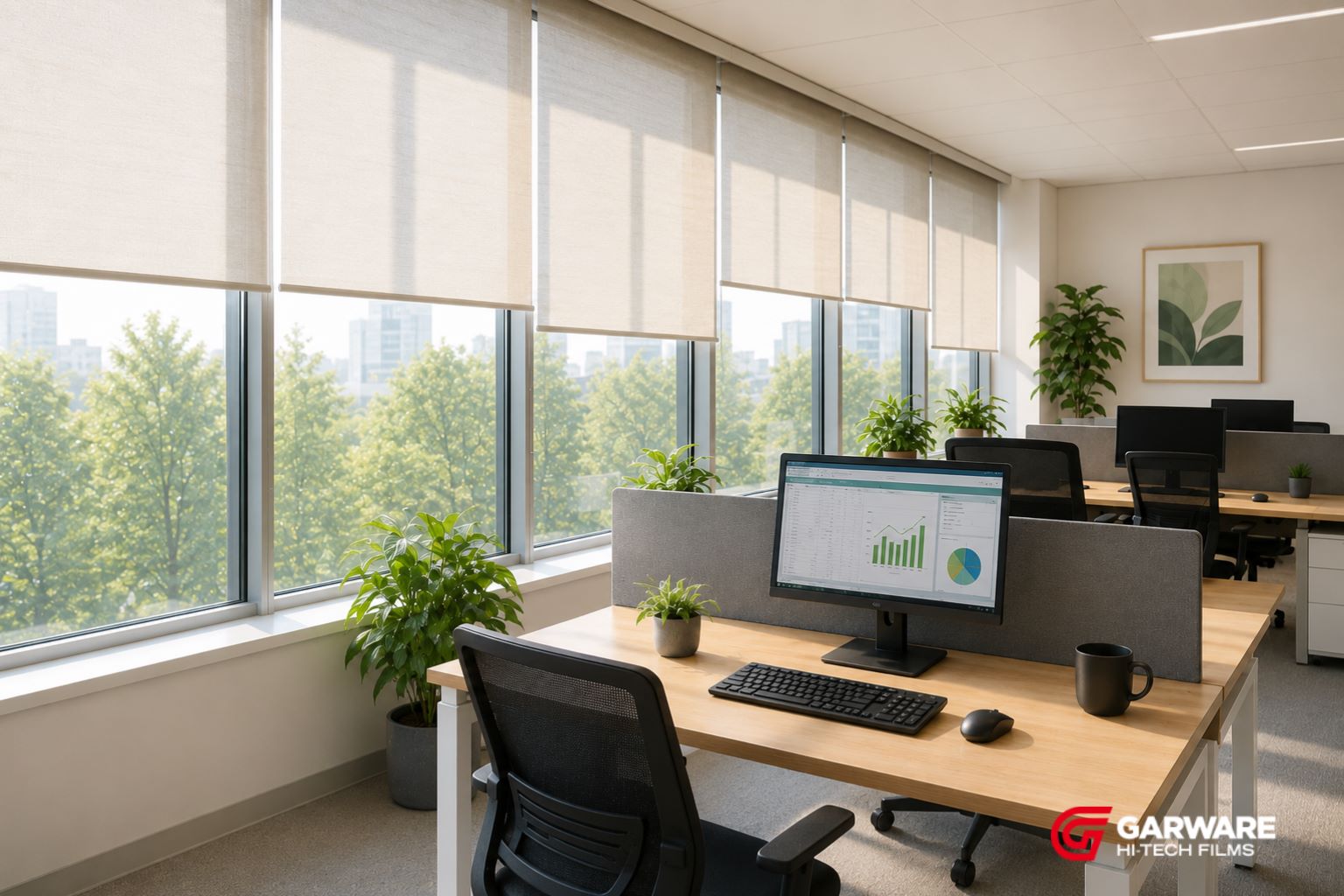
Natural light plays a big role in today’s workplaces. It can help people feel more comfortable, stay focused, and enjoy a better working environment. But for many businesses, it can be challenging to reduce glare in office spaces without cutting down on daylight. Finding ‘how to reduce glare without blocking light’ is important for maintaining both comfort and productivity.
Large glass facades are common in many Indian office buildings. They bring in plenty of sunlight, but can also cause glare, screen reflections, and unwanted heat. To fix this, many offices use blinds, which often reduce daylight as well.
A better approach is to focus on glare control instead of office daylight control. This helps improve comfort while still enjoying the benefits of natural light.
Let’s look at some effective ways to manage office glare while keeping spaces bright.
Quick Answer: Best Ways to Reduce Office Glare Without Blocking Natural Light
The most effective ways to achieve office glare reduction include:
-
Installing high-VLT solar control window films
-
Using light-diffusing blinds instead of blackout blinds
-
Moving desks away from direct sunlight
-
Changing monitor positions and screen settings
-
Improving office lighting
Many offices choose solar control films because they help cut glare while still letting in daylight.
What Causes Glare in Office Spaces? (Common Sources Explained)
Glare happens when light becomes too bright and makes it harder to see comfortably. It is usually caused by direct sunlight, reflections, or lighting that is not positioned properly.
Common causes include sunlight coming through windows, reflections on computer screens, shiny furniture, polished floors, and poorly placed light fixtures.
Types of Office Glare (Direct, Reflected & Artificial)
The table below highlights the main types of glare found in workplaces.
|
Type of Glare |
Source |
Impact of Employees |
|
Direct Glare |
Sunlight entering windows |
Eye strain and discomfort |
|
Reflected Glare |
Screens and glossy surfaces |
Reduced screen visibility |
|
Artificial Lighting Glare |
Poor lighting design |
Visual fatigue |
Knowing what causes the glare makes it easier to find the right workplace eye-comfort solutions.
Which Office Areas Experience the Most Glare?
Certain office areas are more vulnerable to glare than others.
Workstations located near windows often experience direct sunlight. Meeting rooms with large glass facades frequently face screen reflection issues during presentations and video calls. Reception areas, open-plan offices, and south- or west-facing workspaces also tend to receive stronger sunlight exposure throughout the day.
Identifying these problem zones is the first step to reduce sunlight glare in workspace environments effectively.
Why Office Glare Affects Productivity, Comfort & Employee Health
Glare affects more than visual comfort. Understanding glare vs brightness in offices is important, as glare can influence productivity, employee satisfaction, and workplace performance.
Too much glare can lead to eye strain, headaches, and tiredness. Reflections on screens can also make it harder to work, affecting focus and productivity.
In today’s hybrid workplaces, glare can even impact video calls. Bright light and screen reflections can make it difficult to see clearly during meetings and collaborate effectively. People who spend long hours on screens need comfortable viewing conditions to stay focused throughout the day.
This is why many businesses also explore glare-free office lighting ideas to create a more comfortable work environment.
How Natural Light Improves Workplace Productivity
Natural light is one of the most important features of a well-designed workplace. When managed properly through natural light optimisation in offices, it can help employees feel better and work more comfortably throughout the day.
The key benefits are summarised below.
|
Benefit |
Impact |
|
Employee Well-being |
Improved comfort and satisfaction |
|
Productivity |
Better focus and efficiency |
|
Energy Savings |
Reduced daytime lighting costs |
|
Workplace Appeal |
More attractive work environment |
Natural daylight also supports sustainability goals and reduces dependence on artificial workplace productivity lighting during working hours.
Best Ways to Reduce Glare Without Blocking Natural Light
Several strategies can help businesses reduce sunlight glare in office environments while preserving daylight.
Use Solar Control Window Films for Glare Reduction
One of the most effective anti-glare solutions for offices is solar control window film.
These sun control solutions for buildings help soften harsh sunlight without making the office feel dark. High-VLT films let natural light pass through while helping reduce glare.
They also help reduce heat, block UV rays, improve indoor comfort, and support energy savings. This is why many businesses choose glare reduction film for office windows as a long-term solution.
Reposition Workstations to Reduce Screen Glare
The way desks are placed can make a noticeable difference to visual comfort in office design.
Keeping desks to the side of windows, rather than directly in front of them, can help reduce glare. Computer screens should also be positioned away from direct sunlight and window reflections. Simple layout changes can help reduce screen glare in office spaces naturally.
Use Light-Diffusing Blinds Instead of Blackout Blinds
Light-filtering blinds help soften strong sunlight while supporting effective office interior lighting design and keeping the space bright.
Unlike blackout blinds, they do not block all daylight. These glare management solutions make the office more comfortable without making the interiors feel dark.
Optimize Monitor Placement & Use Anti-Glare Screens
Many employees wonder how to reduce glare on computer screens at work. Simple monitor adjustments can make a noticeable difference.
Anti-glare screen coatings, monitor hoods, and appropriate brightness settings help minimise reflections and improve screen visibility.
Reduce Reflective Surfaces in Office Interiors
Shiny surfaces can make glare more noticeable.
Using matte-finish desks, non-reflective flooring, smart glass for glare control, and low-sheen wall finishes can help cut down reflections and make the office more comfortable to work in.
Optimize Office Lighting to Minimise Glare
Many office lighting glare reduction tips focus on maintaining the right balance of light.
Using a mix of ambient, task, and indirect lighting can help reduce harsh brightness differences and create a more comfortable workspace.
Together, these strategies support office environment optimisation, creating a more comfortable, balanced, and productive workplace.
Why Solar Control Window Films Are the Best Solution for Office Glare?
Solar control window films have emerged as a leading daylight management solution for commercial buildings.
They help reduce glare without cutting down too much natural light or blocking outside views. They also help keep out heat and harmful UV rays, making the workplace more comfortable and efficient.
As businesses prioritise both well-being and efficiency, these commercial window films continue to gain popularity.
How Glare Reduction Improves Energy Efficiency in Offices
Effective glare control can also lower operational costs.
By reducing solar heat gain, solar control solutions decrease cooling requirements and reduce HVAC usage. This improves comfort, supports ergonomic office lighting, and lowers energy consumption.
These benefits support sustainability initiatives and contribute to greener workplace operations.
Solar Control Window Films vs Blinds: Which Is Better for Glare Reduction?
To understand which solution works better for reducing office glare without blocking natural light, compare solar control window films and blinds across key performance factors below.
|
Factor |
Blinds |
Solar Control Films |
|
Glare Reduction |
Good |
Excellent |
|
Natural Light Retention |
Moderate |
High |
|
Outside View |
Often Blocked |
Maintained |
|
Heat Reduction |
Limited |
Significant |
|
Energy Savings |
Low |
High |
This comparison shows why many offices are moving towards office energy-efficient lighting in the form of solar film-based solutions.
How to Choose the Right Glare Reduction Solution for Your Office
The ideal solution depends on the office layout, building design, and the light diffusion techniques being considered.
Best Glare Reduction Solutions by Office Type
|
Office Type |
Recommended Solution |
|
Small Office |
Solar film + workstation optimisation |
|
Open Office |
Solar film + light-diffusing blinds |
|
Glass Facade Office |
High-performance solar control film |
|
Meeting Rooms |
Solar film + smart lighting |
|
Co-working Spaces |
Combined glare management strategy |
Solutions such as solar control films from Garware Hi-Tech Films can help offices manage glare effectively while maintaining comfortable natural light levels.
Selecting solutions according to office requirements delivers the best long-term results.
Common Mistakes That Increase Office Glare (And How to Avoid Them)
Many businesses unintentionally worsen glare by:
-
Using reflective furniture and flooring
-
Positioning monitors incorrectly
-
Relying heavily on blackout blinds
-
Ignoring window orientation
-
Implementing poor lighting layouts
-
Choosing dark films that reduce daylight excessively
Avoiding these mistakes can significantly improve workplace comfort.
Quick Comparison of Office Glare Reduction Solutions
The table below provides a quick overview of popular glare-control options.
|
Solution |
Glare Reduction |
Natural Light Retention |
|
Solar Control Window Film |
High |
High |
|
Light-Diffusing Blinds |
Medium |
Medium-High |
|
Blackout Blinds |
High |
Low |
|
Desk Repositioning |
Medium |
High |
|
Anti-Glare Monitor Screens |
Medium |
High |
A combination of solutions generally provides the most effective results.
Conclusion: How to Create a Glare-Free Office Without Blocking Natural Light
Natural light does not need to be blocked to manage glare. Businesses that reduce glare in office spaces can create a more comfortable workplace while still enjoying the benefits of daylight.
Solutions such as office window film for glare reduction, workstation optimisation, light-filtering blinds, and better lighting design can make a noticeable difference. Among these, solar control films remain one of the most effective long-term solutions as they reduce glare, allow natural light in, and help improve energy efficiency.
When combined with smart workplace design, these solutions can create a brighter, more comfortable, and productive office environment.
FAQs on Reducing Office Glare Without Blocking Natural Light
1. How can I reduce glare in my office without blocking natural light?
Use window films or light-filtering blinds to soften sunlight while keeping the space bright.
2. What are the best window treatments to minimise glare in offices?
Light-filtering blinds and solar control films work well for reducing glare without making offices feel dark.
3. Does window film help in reducing office glare?
Yes, window films can cut down glare and make screens easier to view during the day.
4. How do I reduce glare on computer screens in the office?
Keep screens away from direct sunlight and use glare-control solutions on windows.
5. Can office lighting contribute to glare issues?
Yes. Lights that are too bright or placed in the wrong spot can create glare and make screens harder to view.
6. What is the difference between glare reduction and light blocking?
Glare reduction cuts down harsh reflections, while light blocking simply reduces the amount of light coming in.
7. Are there energy-efficient ways to control glare in offices?
Yes. Solar control films can help reduce glare and heat, which may also lower air-conditioning use.
8. How does glare affect productivity in the workplace?
Constant glare can make employees feel tired, strain their eyes, and affect concentration.
9. What is the best office layout to avoid glare issues?
A layout where screens are placed away from direct sunlight usually works best.
10. Do solar control window films reduce glare without making offices dark?
Yes. They help soften harsh sunlight while keeping the office bright and comfortable.