
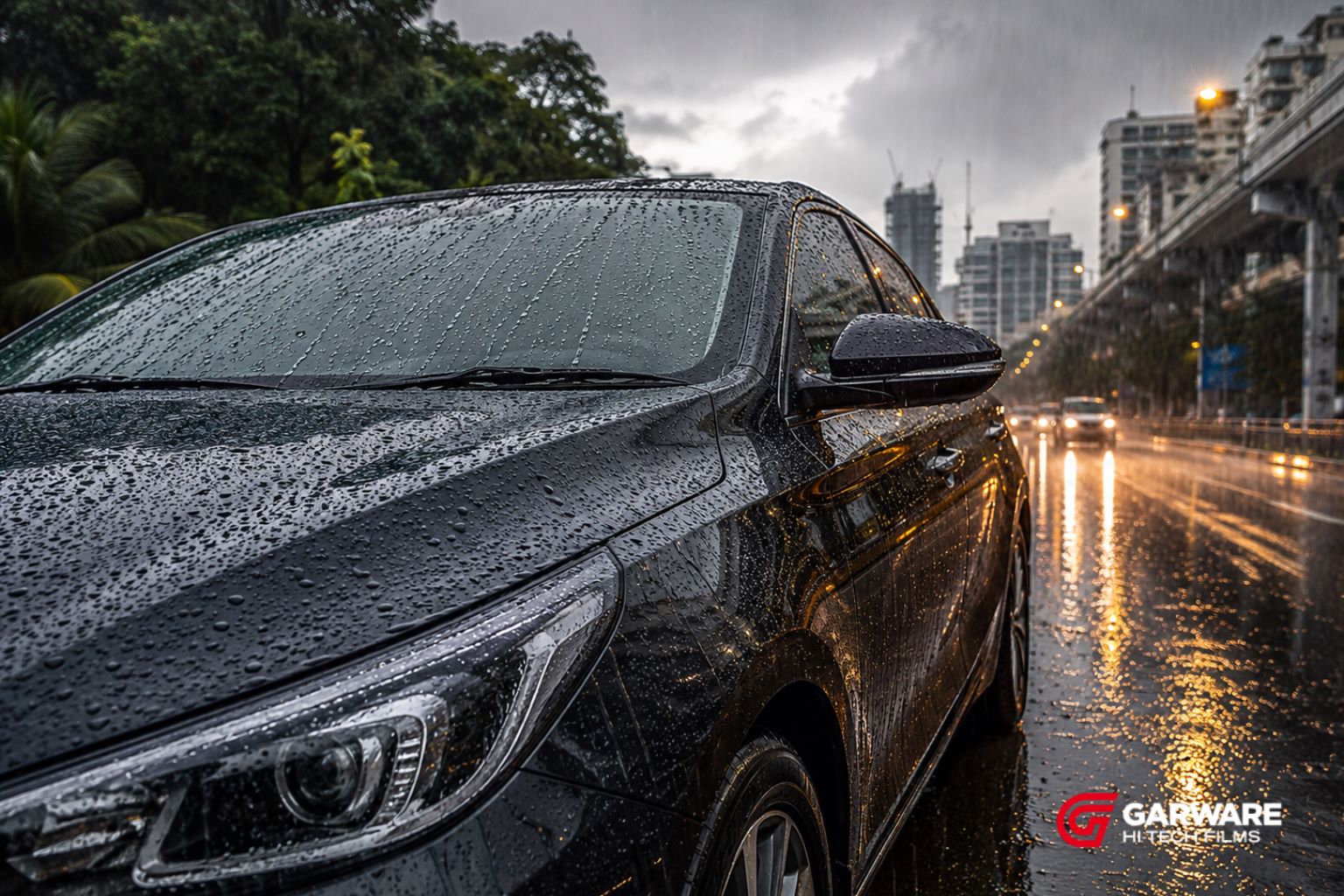
Heavy rains can take a serious toll on your vehicle. Constant exposure to moisture, mud, road grime, and contaminated rainwater can gradually affect both appearance and performance. This is why a water repellent coating for cars has become a popular solution among vehicle owners looking for reliable monsoon protection. Whether it is a hydrophobic coating for cars, a water repellent coating for car windshields, or an advanced car paint protection coating, these treatments help minimise rain-related damage while improving visibility and ease of maintenance.
Rain can leave dirt and marks on your car, especially during long spells of wet weather. Over time, this can affect the look of the paint and make stains harder to remove. Modern coatings help reduce these problems and keep the surface easier to maintain.
Let us explore how these protective technologies work and why they are becoming an essential part of car coating for monsoon care.
Quick Answer: How Water-Repellent Coatings Protect Your Car in Heavy Rains
Water-repellent coatings offer multiple benefits during monsoon conditions:
-
Create a hydrophobic surface that causes water to bead and roll away.
-
Reduce water spots, mud accumulation, and paint contamination.
-
Provide acid rain protection and defence against pollutants.
-
Improve windshield visibility during heavy rainfall.
-
Make cleaning easier and support monsoon paint protection.
-
Ceramic and graphene coatings offer long-lasting rain protection for cars.
What Is a Water-Repellent (Hydrophobic) Coating for Cars?
A hydrophobic car coating is a protective layer that repels water from paint or glass surfaces. It works through hydrophobic surface technology, reducing the ability of water to spread across the surface.
Instead of forming a sheet, water gathers into droplets and rolls away. This process, often called the water beading effect, helps carry dirt and contaminants away from the vehicle.
Unlike traditional wax, which provides temporary protection, modern coatings offer stronger durability and better water runoff technology, making them especially useful during Indian monsoons.
Hydrophobic Coating vs Uncoated Surface: Key Differences
The difference between protected and unprotected surfaces becomes evident during rainfall.
|
Feature |
Uncoated Car Surface |
Hydrophobic Coated Surface |
|
Water Behavior |
Spreads & Sticks |
Beads & Rolls Off |
|
Dirt Accumulation |
High |
Low |
|
Water Spots |
Frequent |
Reduced |
|
Cleaning Effort |
Higher |
Lower |
This is why monsoon car coating protection is becoming more important for car owners.
How Heavy Rains Damage Car Paint, Glass & Finish
During the monsoon, rain often leaves dirt and grime on your car's surface. If it is not cleaned regularly, the paint can start to lose its shine and look worn out.
Road splashes add mud, grime, and debris to the vehicle. When left untreated, these contaminants can affect the finish and contribute to surface imperfections.
Mineral deposits left behind after water evaporation often lead to water spot prevention challenges. Continuous exposure may also increase oxidation and paint dullness.
In coastal cities like Mumbai, Chennai, and Kochi, high humidity, salty air, and constant moisture can make car paint protection during monsoon even more important.
How Water-Repellent Coatings Protect Your Car During Monsoon
Modern rain protection coating for cars works in several ways to reduce weather-related damage.
1. Prevents Water Pooling and Mineral Stains
With the water beading effect, rainwater does not stay on the surface for long. This helps reduce watermarks and the marks left behind after the water dries.
2. Protection Against Acid Rain Damage
Rainwater can pick up pollutants along the way. A coating helps with acid rain protection by limiting contact between these elements and the paint.
3. Helps Reduce Moisture-Related Corrosion Risks
Long-term moisture exposure can affect vulnerable areas such as panel edges and paint imperfections. Hydrophobic protection reduces water retention, helping minimise corrosion-related concerns.
4. Keeps Mud, Dirt and Grime from Sticking
One of the most appreciated car coating benefits in the monsoon is easier cleaning. Dirt and grime find it harder to bond with coated surfaces, allowing faster maintenance after rainy drives.
5. Improves Driving Visibility
A hydrophobic windshield coating helps rainwater disperse rapidly from the glass. Improved visibility can make driving safer during heavy showers and low-light conditions.
6. Reduces Wiper Friction and Wear
A smoother windshield creates less drag on the wiper blades. This helps the wipers move more easily and may improve their performance while also helping them last longer.
Together, these benefits provide effective rain protection for car paint and make driving in rainy conditions more comfortable.
Different Types of Water-Repellent Coatings for Cars
There are different coating options to suit different protection needs.
Windshield Water-Repellent Coatings
These coatings are designed specifically for automotive glass. Their primary purpose is visibility enhancement through improved water dispersal. Although effective, they generally require more frequent reapplication than paint coatings.
Ceramic Coatings
Ceramic coating for cars forms a tough protective layer over the paint. It helps water slide off easily while maintaining shine and offering enhanced UV and chemical resistance.
Some important ceramic coating benefits in monsoon include less dirt buildup, easier washing, and better paint protection. With proper care, the coating can last for years.
Graphene Coatings
Graphene coating for cars is a newer coating option that offers a smooth finish, strong water repellency, and better protection against water spots.
Some notable graphene coating benefits include high durability, good heat resistance, and reliable performance in humid weather. These advantages have made it a popular choice for Indian driving conditions.
PPF with Hydrophobic Coating
PPF combines physical and chemical protection. Along with hydrophobic properties, it offers protection against scratches, stone chips, and minor abrasions.
For maximum car paint protection coating, many car owners prefer PPF with a hydrophobic top layer.
Ceramic vs Graphene vs PPF: Which Coating Is Best for Monsoon?
The following comparison highlights how different coating technologies perform across key protection areas.
|
Feature |
Windshield Coating |
Ceramic Coating |
Graphene Coating |
PPF with Hydrophobic Layer |
|
Water Repellency |
High |
High |
Very High |
High |
|
Paint Protection |
No |
Yes |
Yes |
Excellent |
|
Durability |
Low |
High |
Very High |
Very High |
|
Scratch Protection |
No |
Limited |
Limited |
Yes |
|
Maintenance Ease |
Moderate |
High |
Very High |
High |
Understanding the differences in ceramic coating vs graphene coating performance can help vehicle owners choose the most suitable protection option.
Signs Your Car Needs a Water-Repellent Coating This Monsoon
Here are a few signs that your current protection may not be working as well as it should:
-
Water stays on the surface instead of beading up.
-
Water spots keep showing up after rain.
-
The paint no longer feels smooth.
-
Dirt sticks to the surface more easily in wet weather.
-
The shine does not last long after a wash.
These signs suggest it may be time to upgrade your monsoon car coating protection.
How to Maintain Hydrophobic Coatings During Monsoon Season
During the monsoon, cars tend to get dirty more often, so regular washing helps. If the car has been out in heavy rain, it is a good idea to wipe off the water once you're back.
Maintenance sprays and occasional check-ups can also help the coating hold up better.
Monsoon Maintenance Checklist for Coated Cars
|
Maintenance Task |
Recommended Frequency |
|
Car Wash |
Every 1–2 Weeks |
|
Surface Inspection |
Monthly |
|
Water Beading Check |
Monthly |
|
Maintenance Spray |
As Recommended |
|
Professional Inspection |
Every 6–12 Months |
Following this routine can help maximise the lifespan of your hydrophobic coating for cars.
Are Water-Repellent Coatings Worth It in Indian Monsoons?
For many vehicle owners, the answer is yes. These coatings improve safety through better visibility, reduce cleaning effort, and help protect car paint from water damage caused by contaminants and moisture exposure.
Garware Hi-Tech Films offers advanced paint and surface protection solutions that help shield your car from harsh monsoon conditions. This can help keep the paint looking better for longer while making routine maintenance easier.
Cars that are used every day or parked outside tend to benefit the most. Another advantage is that the paint may need less attention over the years.
Conclusion: Best Water-Repellent Coatings for Monsoon Car Protection
Heavy rains expose vehicles to pollutants, moisture, road grime, and mineral deposits that can gradually affect paint quality and appearance. A water repellent coating for cars creates a protective barrier that supports water spot prevention, enhances protection against rain, and improves driving visibility during challenging weather.
From windshield treatments and ceramic coatings to advanced graphene coatings and PPF solutions, each option provides a different level of protection. The right rain protection coating for cars depends on how often you drive, the weather conditions your vehicle faces, and the protection you want.
Investing in monsoon paint protection can help keep your car looking cleaner, make maintenance easier, and protect its finish during India's harsh rainy season.
FAQs: Water-Repellent Coatings for Cars in India
1. How do water-repellent coatings work on cars?
They create a protective layer that causes water to bead up and roll off the surface instead of sticking to it.
2. Do water-repellent coatings really protect your car during heavy rains?
Yes, they help reduce water buildup and make it harder for dirt and contaminants to stick to the vehicle.
3. What is the difference between ceramic coating and graphene coating?
Ceramic coatings offer strong paint protection, while graphene coatings are known for better heat resistance and reduced water spotting.
4. Can water-repellent coatings prevent water spots completely?
No, but they can significantly reduce the chances of water spots forming on the surface.
5. Do these coatings help improve visibility while driving in rain?
Yes, especially on glass surfaces, where water clears away more quickly during rainfall.
6. Are water-repellent coatings worth it for the monsoon season?
For many car owners, they are a useful investment because they improve protection and make maintenance easier.
7. Can I apply a water-repellent coating myself?
Some products are DIY-friendly, but professional application usually provides better and longer-lasting results.
8. Can water-repellent coatings help reduce rust and corrosion risks?
They can help limit moisture contact with painted surfaces, which may reduce the risk of corrosion over time.
9. How should I maintain my car after applying a coating during rains?
Wash the car regularly with a mild shampoo and remove mud or dirt deposits as soon as possible.
10. Does a water-repellent coating reduce the need for car washing?
It can help the car stay cleaner for longer, but regular washing is still necessary to maintain the finish.