
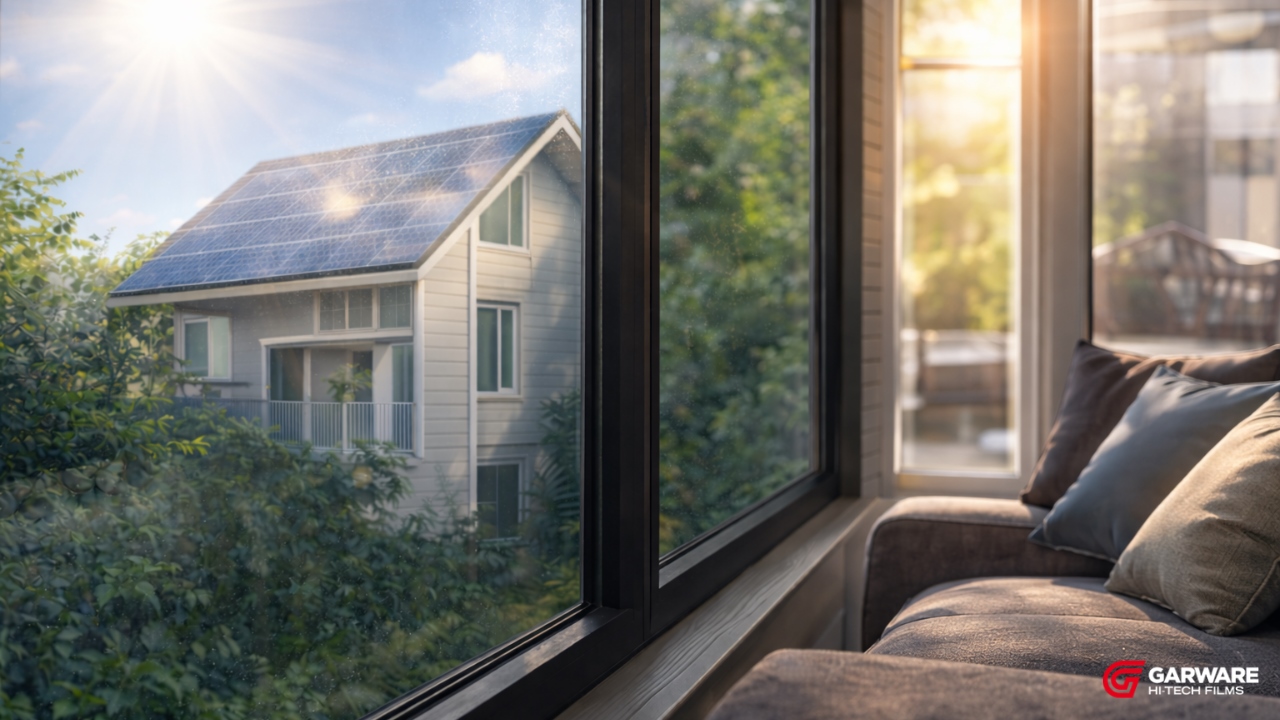
Rising indoor heat, fading furniture, and limited privacy are common concerns for modern homeowners. As energy costs increase and climate conditions become more extreme, finding practical solutions becomes essential. One of the most effective and affordable upgrades today is installing window film for homes.
Unlike expensive window replacements, window films enhance the performance of existing glass. They can block up to 99% of harmful UV rays, improve insulation, increase comfort, and enhance safety. The wide range of residential window film benefits makes it a smart investment for long-term protection and energy efficiency without major renovation.
What Is Residential Window Film?
Residential window films are thin, multi-layer polyester sheets professionally applied to existing glass. Designed to enhance performance, they help improve insulation, reduce solar heat gain, block UV radiation, and add an extra layer of protection.
Instead of replacing windows entirely, residential window tinting enhances the efficiency of current glass surfaces while maintaining natural daylight and outside views.
Energy Savings: How Window Film Improves Home Insulation
One of the most noticeable improvements after installation is reduced energy consumption. By limiting heat transfer through glass, films help keep interiors cooler in summer and warmer in winter.
At energy saving window film for home applications improves thermal efficiency, reducing dependence on air conditioning and heating systems. Over time, this can translate into measurable savings on energy bills.
UV Protection: How Window Film Blocks 99% of Harmful UV Rays
Ultraviolet radiation can pass through untreated glass and contribute to skin damage and long-term health risks. Installing a UV protection window film significantly reduces indoor UV exposure while still allowing visible light to enter.
This protection creates a safer indoor environment for families who spend extended time near windows.
Prevents Furniture, Flooring & Interior Fading
Sunlight is one of the leading causes of fading in wooden floors, curtains, upholstery, artwork, and decor. Prolonged exposure can permanently damage expensive interiors.
Through effective window tinting for homes, UV rays are filtered before they reach interior surfaces, preserving colour, texture, and overall appearance for years.
Reduces Solar Heat and Keeps Indoor Spaces Cooler
Large glass areas can cause rooms to overheat during peak daylight hours. A solar control window film reduces excessive heat gain by reflecting and absorbing infrared radiation.
This contributes to noticeable home window heat reduction, especially in rooms facing direct sunlight, while also lowering the cooling load on air conditioning systems.
Reduces Screen Glare for TVs, Laptops & Mobile Devices
Glare from sunlight often disrupts TV viewing and affects laptop or mobile screen visibility. Films help diffuse harsh light without darkening rooms excessively.
As part of the overall home window tinting benefits, glare reduction improves productivity in work-from-home setups and reduces eye strain.
Enhances Daytime Privacy Without Blocking Natural Light
Homes located near streets or neighbouring buildings often require additional privacy solutions. A privacy window film for residential use allows occupants to enjoy natural light while limiting visibility from outside during the day.
These practical house window privacy solutions are especially useful for living rooms, bedrooms, and ground-floor windows.
Improves Home Safety with Security Window Film
Glass breakage due to accidents, storms, or attempted intrusion can pose serious risks. A professionally installed security window film for houses helps hold shattered glass together, reducing injury from flying shards.
While it does not make windows unbreakable, it adds resistance and delays forced entry attempts, enhancing household safety.
Cost-Effective Alternative to Replacing Windows
Replacing windows can be expensive and time-consuming. In comparison, residential window tinting offers a more affordable upgrade that significantly improves performance.
By strengthening and enhancing existing glass, homeowners gain efficiency improvements without structural changes.
Improves Indoor Comfort and Temperature Balance
Uneven temperatures across different rooms can make a home uncomfortable. Areas with larger windows often feel warmer than shaded spaces.
Installing window film for homes helps regulate heat transfer, creating a more consistent indoor temperature and improving overall living comfort.
Enhances Home Appearance and Modern Aesthetics
Beyond functionality, window films also contribute to exterior appearance. Modern films provide a sleek and uniform finish that complements contemporary architecture.
With multiple tint shades and finishes available, window tinting for homes can subtly upgrade curb appeal while delivering performance advantages.
Types of Window Film for Residential Windows
Different needs require different film solutions:
-
Solar control window film for reducing heat and glare
-
Privacy window film for residential use for enhanced discretion
-
Decorative films for design enhancement
-
Security window film for houses for added protection
-
Low-E films for improved insulation
Each option delivers specific residential window film benefits depending on climate and household requirements.
Are Window Films Worth It for Homes?
For many homeowners, the answer is yes. From lowering energy consumption to protecting interior furnishings and increasing privacy, the advantages are both immediate and long-term.
An energy-saving window film for home use can gradually offset installation costs through reduced cooling expenses while improving daily comfort.
Final Verdict: Why Window Film Is a Smart Home Upgrade
Upgrading to window film for homes is a practical way to enhance efficiency, safety, and comfort without replacing existing windows. From superior UV protection and effective heat control to improved privacy and added security, the overall residential window film benefits make this solution a smart long-term investment.
By strengthening and enhancing existing glass rather than replacing it, homeowners can achieve better performance at a fraction of the cost. For best results, consult a professional installer and consider trusted solutions like Garware Hi-Tech Film, known for delivering advanced window film technology tailored to modern residential needs.
FAQs on Residential Window Film
1. Do window films really reduce heat inside the home?
Yes. A solar control window film significantly reduces solar heat gain and improves indoor comfort.
2. How much energy savings can window films provide?
Savings vary by climate, but an energy-saving window film for the home can reduce cooling costs noticeably, especially in hot regions.
3. Do residential window films block UV rays completely?
High-quality UV protection window film blocks up to 99% of harmful UV rays.
4. Can window films provide privacy at night?
Standard films provide daytime privacy. For nighttime privacy, specialised house window privacy solutions may be required.
5. How long do window films last on residential windows?
Most professionally installed films last 10 to 20 years, depending on quality and climate.
6. Will window film make my home too dark?
Modern films are available in various tint levels, allowing light transmission while reducing glare and heat.
7. Are window films better than replacing windows?
For many homeowners, residential window tinting is a more affordable and practical alternative to full replacement.
8. Do security window films prevent glass breakage?
A security window film for houses does not make glass unbreakable but holds shattered pieces together to reduce injury risk.
9. Can window films be removed or replaced later?
Yes, professional installers can safely remove or replace films if needed.
10. Are residential window films suitable for all climates?
Yes. Different film types are designed to perform effectively in hot, cold, and mixed climates.