
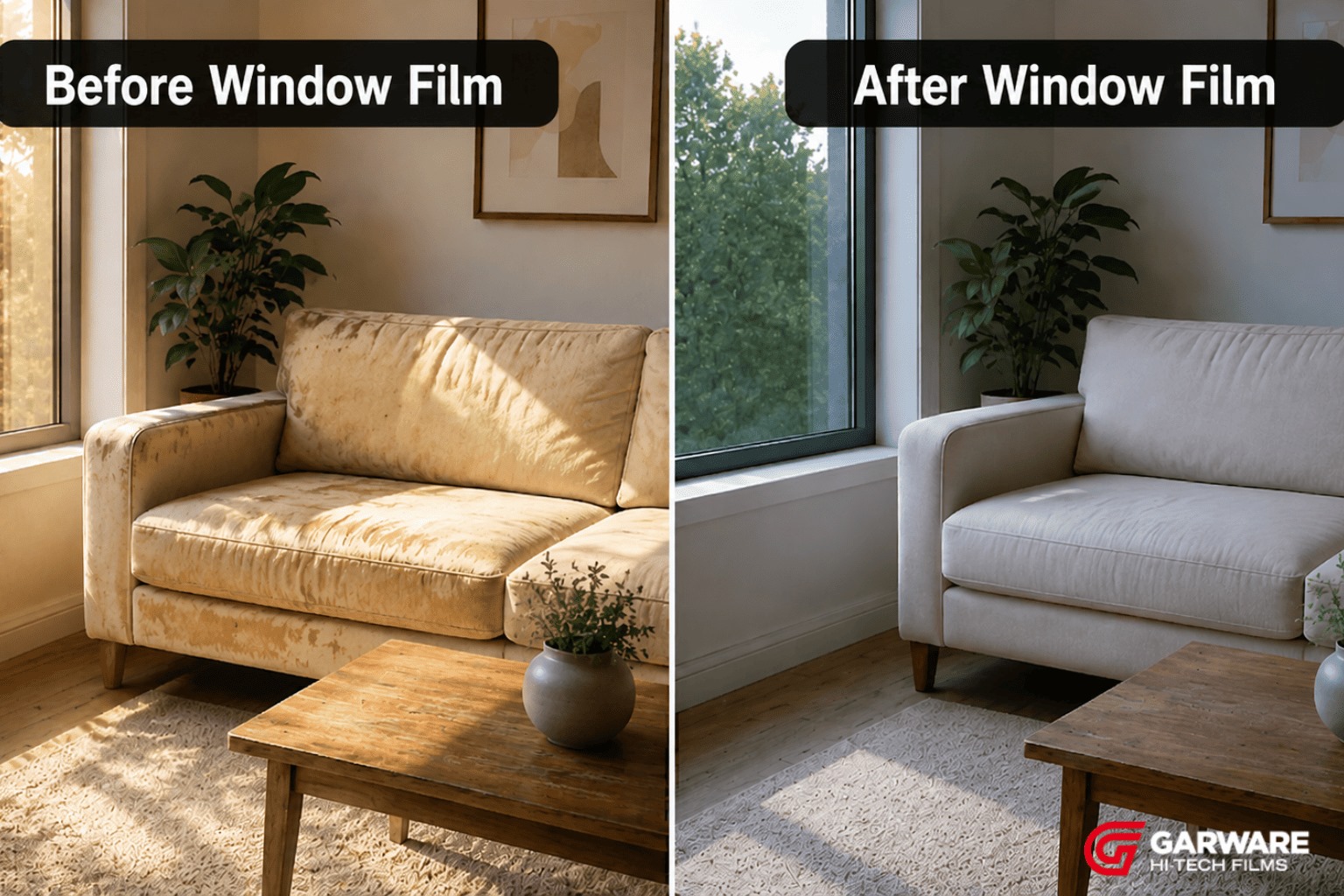
Sunlight improves a home's appearance, but its long-term effects are often overlooked. Over time, furniture can fade, lose its finish, and weaken due to UV radiation, Infrared heat, and the Visible light spectrum. This is why many look for ways to protect furniture from sun damage.
Materials like wood, leather, fabric, and laminate react differently, but all are affected over time. A practical way to reduce this impact is by using window film, which acts as a protective layer while still letting natural light in.
To understand its value, it helps to look at how sunlight affects interiors and how window film helps preserve them.
What Causes Furniture & Interior Fading?
Furniture and interiors fade primarily due to constant exposure to sunlight. Three key elements are responsible, and each affects the materials differently.
-
UV radiation (Primary Cause): This is the most damaging part of sunlight. It breaks down colours, dyes, and fibres at a microscopic level, which leads to visible fading over time.
-
Infrared heat: This is the heat you feel from sunlight. It raises indoor temperatures and causes materials to dry out, crack, or weaken faster.
-
Visible light spectrum: Even the light we can see plays a role. It slowly causes discolouration, especially in fabrics and painted surfaces.
Together, these elements gradually damage interiors, which is why taking steps to prevent the fading of furniture from sunlight becomes important before the changes start showing.
How Window Films Protect Interiors from Sun Damage
Window films help protect interiors by reducing the harmful effects of sunlight without blocking natural light. Their performance comes from how they are designed and layered.
-
UV Blocking: Blocks more than 99% of UV radiation, helping prevent colours and fibres from breaking down.
-
Heat Reduction: Limits the impact of Infrared heat by 50-75%, keeping indoor spaces cooler and reducing material damage.
-
Glare Control: Softens harsh sunlight, making interiors more comfortable to live and work in.
-
Natural Light Retention: Allows daylight to enter while filtering out harmful elements from the Visible light spectrum.
The effectiveness of this solution depends on the window film technology. It usually has multiple layers that work together.
Ceramic layers help cut down heat and block UV rays without making the glass look dark or tinted. Polyester layers, on the other hand, give the film strength and help it last longer without peeling or wearing out.
When combined, these layers form a durable shield on the glass, helping reduce sun damage to furniture in a simple, effective way.
How UV Rays Damage Furniture & Interiors
UV radiation slowly breaks down dyes and fibres, which leads to fading, discolouration, and weakening of surfaces over time. The change is gradual, so it often goes unnoticed until the damage becomes visible.
With constant exposure, surfaces can start looking dull and uneven, and their overall finish may not feel the same as before. The strength of materials also reduces slowly, affecting their durability.
Taking early steps to protect interiors from UV rays helps maintain their original look and keeps them in good condition for a longer time.
Key Benefits of Window Film for Furniture Protection
Using anti-fade window film offers more than just basic protection. It helps maintain the look and life of your interiors in a practical way.
-
Helps prevent fading caused by UV radiation and everyday sunlight
-
Keeps materials like wood, leather, fabric, and laminate in better condition for longer
-
Reduces indoor heat, making the space more comfortable
-
Protects flooring, artwork, and other decorative elements from damage
-
Improves energy efficiency by lowering the need for cooling
Overall, these window film UV protection benefits make it a simple and reliable way to preserve the quality of your interiors over time.
Types of Window Films for Home Use
Not all window films are the same. They are made for different needs, depending on how much sunlight your space gets and what kind of protection you want. The table below gives a clear idea of the main options available.
|
Film Type |
UV Protection |
Key Benefit |
Best For |
|
Ceramic Film |
~99.9% |
High clarity, premium protection |
Premium homes, large windows |
|
Reflective Film |
High |
Heat reduction + privacy |
Sun-facing rooms |
|
Dyed Film |
Moderate |
Budget-friendly |
Basic protection needs |
Ceramic Film: Uses tiny ceramic particles to block UV radiation and heat, while still keeping the glass clear. It is a good choice if you want something durable that does not affect visibility.
Reflective Film: Reflects some sunlight away from the windows, helping reduce heat inside and adding a bit of privacy during the day.
Dyed Film: Absorbs light and cuts down glare. It is a more affordable option if you are looking for window tint for home UV protection.
Choosing the right type helps you maintain a good balance of protection, comfort, and overall look.
Window Film vs Curtains & Blinds (Which is Better?)
To choose what works best for your space, it helps to understand how window films are different from curtains and blinds.
|
Feature |
Window Film |
Curtains/Blinds |
|
UV Protection |
High |
Moderate |
|
Heat Reduction |
High |
Low–Moderate |
|
Natural Light |
Maintained |
Blocked |
|
Aesthetics |
Minimal change |
Bulky appearance |
Window films give constant protection from UV radiation and Infrared heat, while still letting natural light come in. Curtains and blinds only block sunlight when closed, so the protection is inconsistent.
Because of this, window films are a more practical solution when thinking about how to stop sun damage to interiors.
Common Concerns About Window Films
Some common questions arise when people consider installing window films.
Will it make the home dark?
Good-quality films are designed to block harmful rays while still letting in enough natural light, so the space does not feel dark.
Does it change how windows look?
Most modern films are very subtle and almost invisible, so they do not affect the overall look of your windows.
Is it worth the cost?
Repairing or replacing faded furniture and flooring can cost much more over time. Installing window films is a more practical and cost-effective way to protect your interiors.
How to Choose the Right Window Film
Choosing the right window film for furniture protection is about finding a good balance between performance and fit in your space.
-
Go for films that block at least 99% of UV rays.
-
Check the Visible Light Transmission (VLT) to keep your room feeling bright.
-
Ceramic-based films are usually a better choice for long-term performance.
-
Professional installation helps the film last longer and work properly.
These points help you choose a window film that works well and lasts longer. Going with trusted options like Garware Hi-Tech Films can make a real difference, as they focus on good-quality materials and reliable window film technology for consistent, long-term protection.
Additional Tips to Protect Interiors from Sun Damage
Window films do a lot, but taking a few extra steps can further enhance protection.
-
Use curtains or blinds along with films for added protection.
-
Move furniture slightly to avoid direct sunlight where possible.
-
Apply protective coatings on wood and leather to keep them in better condition.
-
Check your interiors from time to time to spot early signs of damage.
These simple steps help further reduce sun damage to furniture and keep your interiors looking good for longer.
Why Window Films Are a Long-Term Investment
Window films deliver consistent and long-lasting protection against sunlight damage.
-
More economical than replacing faded furniture.
-
Durable materials ensure an extended lifespan.
-
Continuous defence against UV radiation, infrared heat, and visible light.
Homes exposed to intense sunlight benefit significantly from UV protection window film, making it a practical and future-ready solution.
Conclusion
Sun damage may happen slowly, but its effect on interiors can be quite noticeable over time. UV radiation, Infrared heat, and the Visible light spectrum together weaken materials like wood, leather, fabric, and laminate.
Using window film for furniture protection is a simple and effective way to maintain your interiors while still allowing natural light to come in. With the right film and proper installation, it becomes easier to protect furniture from sun damage and keep your living space in good condition for the long run.
FAQs
1. What window film protects furniture from the sun?
Films like ceramic or UV-blocking window films are designed to reduce sunlight damage and protect furniture from fading.
2. How to protect indoor furniture from sun damage?
Protect indoor furniture by using window films, closing curtains or blinds during peak sunlight, and keeping furniture out of direct sunlight.
3. Does window film block UV rays or sunlight?
Most window films block harmful UV radiation while still allowing natural light to enter.
4. How long will window film last?
Good-quality window films can last 10 to 15 years with proper installation and care.
5. What causes furniture to fade in sunlight?
Fading mainly occurs due to constant exposure to UV rays, heat, and visible light.
6. Do window films block UV rays completely?
They can block up to 99% of UV rays, but not always 100%.
7. Is window film better than curtains for sun protection?
Window films provide constant protection, while curtains only work when closed.
8. Which window film is best for home interiors?
Ceramic window films are often preferred because they provide good protection without making the glass look dark.