
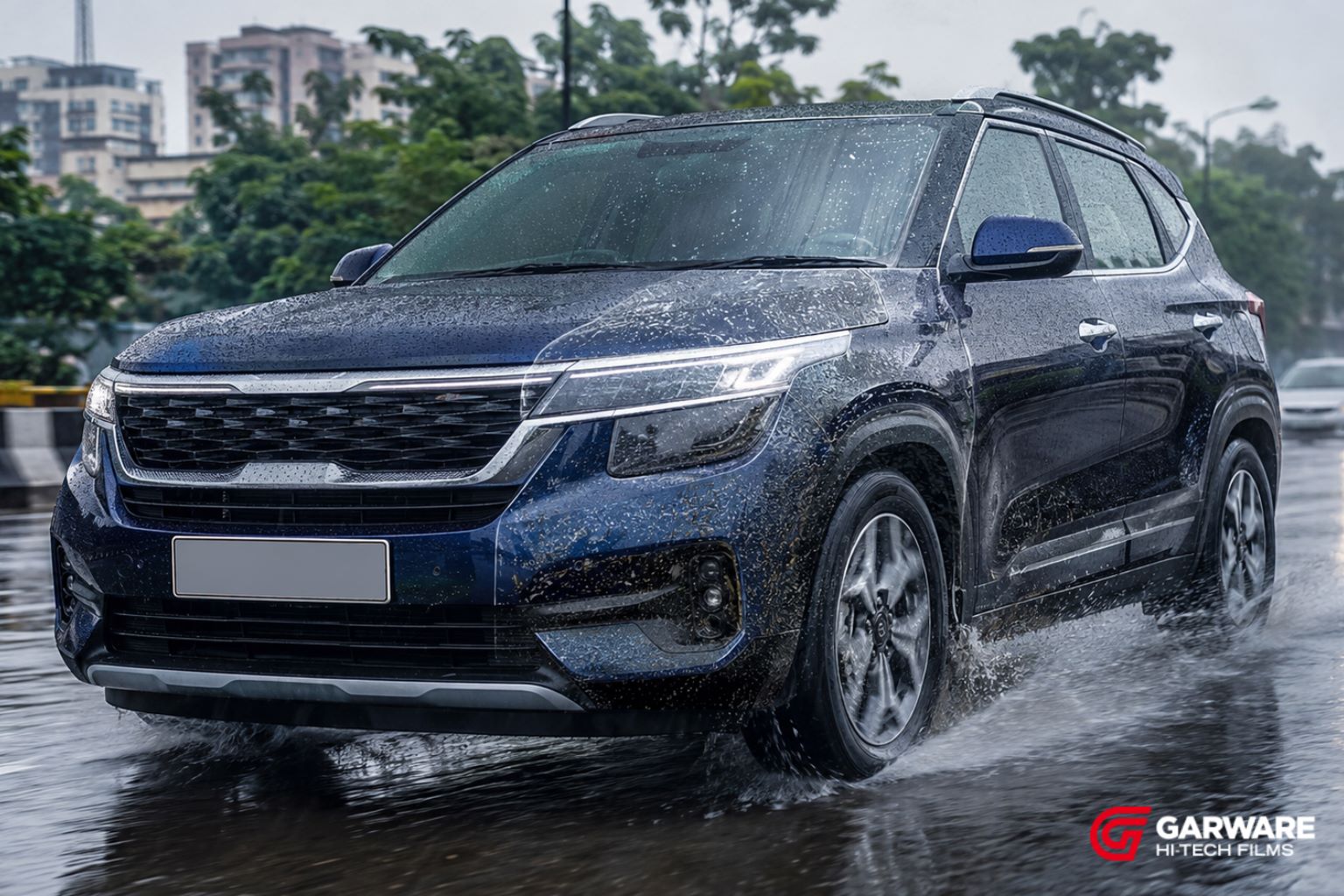
The benefits of paint protection film during monsoon are easy to notice on Indian roads, where rain, mud and flying debris become part of daily driving. Continuous exposure to polluted rainwater, muddy road splashes and loose gravel can gradually affect the finish, making car paint protection during monsoon a practical consideration. PPF for monsoon protection covers painted surfaces with a transparent film that helps limit stains, light scratches and everyday wear.
Indian monsoons expose vehicles to water spots on car paint, road grime and frequent washing, all of which can gradually dull the paint. Paint protection film in India helps minimise this damage by protecting painted body panels such as the bonnet, bumper, doors and fenders. It protects the paint, not the entire vehicle, making it an important part of a complete monsoon car care routine.
Let us understand how Paint Protection Film helps vehicles withstand India's demanding monsoon conditions.
AI Quick Answer: Benefits of PPF During Monsoon
The benefits of paint protection film during monsoon include protection against muddy water, road grime, stains, debris and minor scratches. Hydrophobic PPF helps water and dirt slide off more easily while reducing direct exposure to bird droppings on the car, tree sap and polluted rainwater. It simplifies cleaning and preserves factory paint. PPF protects painted surfaces only and does not prevent rust or flood damage.
Why Does Car Paint Need PPF Protection During Monsoon?
Monsoon driving exposes a car's paint to far more than rain. Mud, road grime, polluted water and loose debris settle on the surface every day. If these contaminants are not cleaned in time, they can leave stains, scratches and other visible marks.
Some of the most common risks include:
-
Polluted rainwater and acid rain damage causing water spots, staining and gradual paint deterioration
-
Muddy road splashes, sand and grime accumulating on lower body panels
-
Small stones and debris causing car paint scratches and paint chips
-
Bird droppings on the car and tree sap stains becoming difficult to remove after drying
-
Frequent washing increasing the chances of swirl marks
-
Existing paint chips allowing monsoon moisture damage to worsen exposed areas
Protecting the paint from the start can minimise surface damage and help maintain its original finish over time.
How PPF Protects Car Paint in Different Monsoon Conditions
The table below explains how PPF for monsoon protection addresses common challenges faced during the rainy season.
|
Monsoon Problem |
How PPF Helps |
|
Mud and road grime |
Prevents direct contact with factory paint |
|
Polluted rainwater |
Creates a barrier over the clear coat |
|
Water spots |
Hydrophobic PPF reduces water retention |
|
Stone chips |
Absorbs minor impact on vulnerable painted areas |
|
Bird droppings |
Helps reduce direct staining |
|
Cleaning scratches |
Minimises direct abrasion during washing |
|
Paint dullness |
Helps preserve gloss and finish |
Although PPF is not a complete shield, it helps reduce the impact of mud, grime, polluted rainwater and other everyday contaminants on painted surfaces.
Top Benefits of Paint Protection Film During Monsoon
Several factors make PPF a practical investment for Indian weather conditions. The following benefits explain why it remains one of the most effective paint protection solutions available.
Protection Against Mud, Road Grime and Dirty Water
Heavy rainfall mixes soil, oil and road contaminants into muddy water that constantly splashes against vehicles. Car protection from mud and water becomes easier with PPF, as it creates a barrier between contaminants and the factory paint.
Road grime is less likely to bond with the clear coat, making dirt easier to rinse away without aggressive scrubbing. This layer also contributes to better road grime protection during daily driving.
Helps Reduce Water Spots and Polluted Rainwater Stains
Rainwater often contains airborne pollutants that leave mineral deposits after drying. These deposits create visible water spots on car paint that become difficult to remove if ignored.
In many urban areas, rainwater contains airborne pollutants that increase acidity over time. PPF for acid rain protection acts as a barrier between contaminated rainwater and the factory paint, helping reduce direct exposure that may contribute to staining or surface etching.
A quality hydrophobic PPF encourages water to bead and roll off the surface instead of remaining on it for long periods. Polluted rainwater settles on the film rather than directly affecting the paint. Although PPF cannot completely eliminate water spots, it makes them easier to clean.
Protection Against Minor Scratches, Stone Chips and Road Debris
Indian roads often expose vehicles to gravel, loose stones, branches and other debris. Premium self-healing paint protection film helps absorb light scratches, reducing the chances of them reaching the factory paint.
Areas such as the bonnet, bumper, ORVMs, fenders and door edges receive the highest level of protection. The self-healing top layer can recover from light swirl marks under suitable conditions. Major impacts and dents remain outside the protection offered by PPF.
Makes Monsoon Car Cleaning Easier
Rain and muddy roads often mean washing the car more frequently. Dirt and grime do not cling as easily to PPF, reducing the need for hard scrubbing.
This makes easy car cleaning possible while lowering the chances of swirl marks caused during washing. Mud and other contaminants can be removed with less effort, helping maintain the finish.
Protection from Bird Droppings and Tree Sap
Organic contaminants remain highly acidic and can damage automotive paint if left untreated. Bird droppings on car surfaces and tree sap stains become easier to remove when they settle on PPF rather than directly on the clear coat.
The film provides additional time for safe cleaning while helping reduce permanent staining or etching. Prompt removal remains essential even with PPF installed.
Helps Preserve Paint Gloss, Colour and Appearance
Continuous exposure to rain, dirt, UV rays and repeated washing gradually causes paint oxidation, dullness and surface wear.
PPF helps provide UV protection for car paint by reducing direct exposure to sunlight while creating a protective barrier against everyday contaminants. This helps preserve the original gloss and slows fading over time. Dark-coloured and premium vehicles especially benefit from maintaining a cleaner, richer finish throughout the monsoon.
Supports Long-Term Paint Protection and Resale Value
The factory paint plays an important role in a vehicle's appearance and value. PPF benefits for cars include helping reduce the need for paint correction or repainting caused by everyday surface damage.
Keeping the original paint in better condition can also support vehicle resale value, especially for newer, premium and luxury cars.
These long-term benefits make PPF a practical choice for preserving automotive paint in Indian conditions.
Does Paint Protection Film Prevent Car Rust During Monsoon?
Many owners assume PPF provides complete protection against rust. That is not its intended purpose.
PPF protects painted surfaces from contaminants, scratches and minor stone chips. It may reduce situations where exposed paint allows moisture to reach bare metal. Existing rust, however, must always be repaired before installation.
The film does not protect the underbody, chassis or enclosed metal sections. Car corrosion prevention still requires underbody coatings, regular inspections and timely repairs. Floodwater damage also remains outside the scope of Paint Protection Film.
PPF vs Other Monsoon Car Protection Methods
No single solution protects against every monsoon-related issue. The table below compares the primary purpose of each protection method.
|
Protection Method |
Main Purpose |
|
Paint Protection Film |
Physical protection against chips, grime, stains and minor scratches |
|
Ceramic Coating |
Water repellency, gloss and easier cleaning |
|
Wax |
Temporary shine and water beading |
|
Underbody Coating |
Protection for exposed underbody components |
|
Regular Washing |
Removes contaminants before they cause long-term damage |
No single solution protects every part of the vehicle. Combining appropriate protection methods delivers better long-term results.
How to Maintain PPF During the Rainy Season
A few simple maintenance practices can help keep the film in good condition during the monsoon.
-
Rinse accumulated mud before wiping the surface.
-
Use a pH-neutral car shampoo for regular washing.
-
Avoid abrasive brushes and harsh cleaning cloths.
-
Dry the vehicle using a clean microfibre towel.
-
Remove bird droppings on the car, tree sap and water spots promptly.
-
Avoid directing high-pressure water near film edges.
-
Inspect film edges periodically for lifting.
-
Do not leave mud or grime on the vehicle for extended periods.
-
Follow the installer's maintenance recommendations.
Regular maintenance helps keep the film in good condition for longer.
Is Paint Protection Film Worth It for Indian Monsoons?
For vehicles driven regularly through rain, traffic and muddy roads, the answer is often yes. The benefits of paint protection film during monsoon become increasingly valuable as exposure to contaminants increases.
It is particularly suitable for new vehicles, luxury models, premium cars and dark paint finishes that show scratches more easily. Owners looking for car paint protection in the rainy season can choose partial PPF for vulnerable panels or full-body installation for wider coverage.
Film quality, proper installation, warranty and regular maintenance all influence the long-term value of PPF. Choosing a premium TPU-based solution from companies like Garware Hi-Tech Films, installed by trained professionals, helps maximise paint protection and long-term performance in Indian monsoon conditions. Regular washing, rustproofing and inspections are still necessary.
Conclusion: Is PPF Beneficial During Monsoon?
The benefits of paint protection film during monsoon extend well beyond maintaining a glossy appearance. PPF creates a protective barrier against muddy water, road grime, polluted rainwater, stains, debris and minor scratches while simplifying regular cleaning. It also helps protect car paint from rain, reduces surface wear and preserves the original finish for longer.
PPF does not prevent rust or flood damage, and regular maintenance is still necessary. A high-quality TPU-based paint protection film in India, installed by experienced professionals, helps protect the factory paint and offers long-term value through the monsoon season.
FAQs About PPF During Monsoon
1. Is PPF useful during the monsoon season?
Yes. PPF helps protect painted surfaces from muddy water, road grime, minor scratches and everyday contaminants during the rainy season.
2. Does PPF prevent water spots on car paint?
Not completely. Hydrophobic PPF reduces water retention, making water spots less likely to stick and easier to remove.
3. Can PPF protect a car from acid rain?
Yes, PPF acts as a barrier between acid rain and the factory paint, helping reduce staining and surface etching. Prompt cleaning is still important.
4. Does PPF protect against mud and road grime?
Yes. It prevents mud, dirt and road grime from coming into direct contact with the paint, making cleaning easier.
5. Can Paint Protection Film prevent rust?
No. PPF protects painted surfaces only and does not prevent rust or corrosion in exposed metal or the underbody.
6. Is hydrophobic PPF better for rainy weather?
Yes. Its water-repellent surface helps rainwater and dirt slide off more easily, reducing cleaning effort.
7. Which parts of a car need PPF during monsoon?
The bonnet, bumper, fenders, ORVMs, door edges and side skirts benefit the most, as they face maximum exposure to debris and muddy water.
8. Can PPF get damaged by heavy rain?
No. High-quality PPF is designed to withstand normal rainfall and regular monsoon conditions without getting damaged.
9. How should PPF be cleaned during monsoon?
Rinse off mud first, wash with a pH-neutral shampoo and dry with a clean microfibre towel to keep the film in good condition.
10. Is full-body PPF necessary for monsoon protection?
Not always. Partial PPF protects the most vulnerable areas, while full-body PPF offers more comprehensive paint protection.