
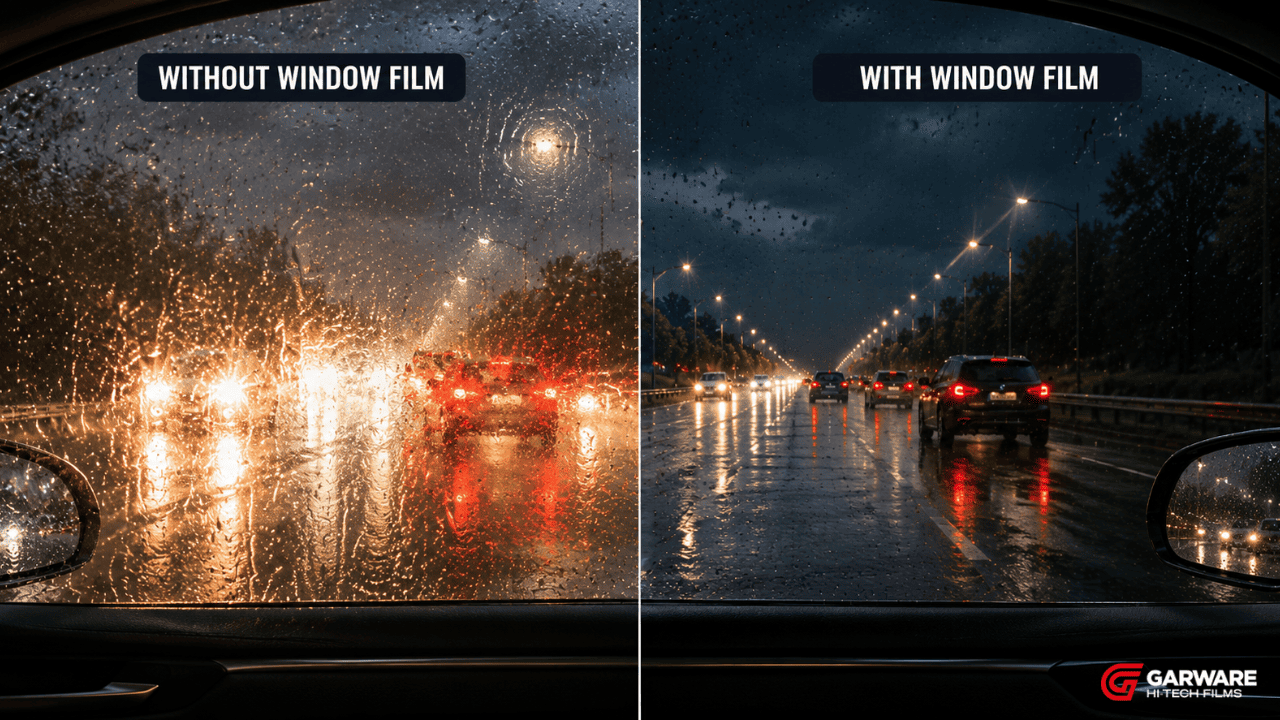
Heavy rain, headlight glare, fogged windows, and poor visibility are some of the biggest challenges motorists face during the monsoon season. Many drivers look for solutions that can make driving safer and more comfortable, leading to growing interest in window films during monsoon conditions. A common question often asked is: Do car window films improve visibility and safety during monsoon weather, or do they create additional visibility problems?
The answer largely depends on the type and quality of film installed. Modern window films are very different from traditional dark tints and are designed to improve driving comfort while maintaining clear visibility. On the other hand, low-quality or excessively dark films can reduce visibility during rain, especially during night driving.
This article explores the benefits, limitations, legal considerations, and real-world effectiveness of car window films for monsoon driving.
Let us take a closer look at how modern window film technology performs when visibility and safety become critical during the monsoon.
Do Car Window Films Really Improve Visibility and Safety During Monsoon? Quick Answer
Yes, high-quality nano ceramic window film can improve driving comfort and contribute to safer driving during monsoon conditions. Advanced films are designed to reduce glare, maintain excellent optical clarity, and minimise visual fatigue without excessively darkening the glass.
Some premium films can help minimise moisture-related visibility problems and make it easier to see in humid conditions. Safety-focused films also help hold broken glass together during an impact, reducing the risk of scattered shards.
Dark or low-quality tints can make it more difficult to see the road during heavy rain and at night. In many cases, the quality of the film has a bigger impact on visibility than the darkness of the tint itself.
Why Visibility Becomes a Major Challenge During Monsoon Driving
Driving during the monsoon can be challenging, even for experienced motorists.
One of the biggest issues is headlight glare reduction. Rain droplets on the windshield can scatter light from oncoming vehicles, creating glare that makes it harder to see the road clearly.
Wet roads introduce another challenge. Reflections from streetlights, traffic signals, and vehicle headlights can create visual distractions and make it harder to judge road conditions accurately.
Heavy rainfall itself can reduce overall rain driving visibility, limiting a driver's ability to spot lane markings, potholes, pedestrians, and other vehicles.
Fogging on the inside of the windows is another common problem during the monsoon. High humidity can cause the glass to mist up, making it harder to see clearly.
Constant changes in lighting, from bright reflections to darker stretches of road, can also strain the eyes and make long drives more tiring.
Do Car Window Films Improve Visibility During Monsoon Conditions?
The performance of a window film is influenced more by its quality and technology than by how dark it is.
High-quality nano ceramic window film can help reduce glare while keeping visibility clear. These films are designed to offer good optical clarity, helping drivers see the road more comfortably during monsoon conditions.
Problems generally arise when very dark or low-quality films are installed. Excessive tinting can restrict incoming light and make it harder to see during rain, dawn, dusk, and night driving.
Proper Visible Light Transmission (VLT) levels are crucial to safety. High-transparency films with appropriate VLT values can provide effective car window film for glare reduction while maintaining clear outward visibility.
In most cases, film technology matters far more than darkness.
How High-Quality Window Films Improve Visibility and Safety During Monsoon
Several features of premium window films contribute to improved monsoon driving safety.
Glare Reduction During Rain
Driving in the rain often means dealing with glare from headlights and reflections on wet roads.
High-quality anti-glare window film helps:
-
Reduce reflections from wet roads
-
Minimise glare from headlights and streetlights
-
Reduce eye strain during long drives
-
Improve overall driving comfort
This type of window film glare reduction can make driving in rainy conditions more comfortable and less tiring.
Improved Contrast and Visual Comfort
Clear vision is not only about brightness. The ability to distinguish objects and road features is equally important.
Premium films can help:
-
Improve contrast perception
-
Enhance visibility of lane markings
-
Make obstacles easier to identify
-
Support better depth perception
These benefits contribute to better decision-making during poor weather conditions.
Anti-Fog and Condensation Control
Humidity during the monsoon can cause car windows to fog up quickly.
Some advanced window films may help with moisture management and support condensation control. While they cannot completely prevent fogging, they can work alongside your car’s defogging system to help maintain clearer visibility inside the cabin.
Improved visibility inside the vehicle contributes to safer driving in humid environments.
Shatter Protection During Accidents
Safety-focused films can function as a shatter protection film or safety glazing film.
In the event of glass breakage, these films help:
-
Hold broken glass together
-
Reduce flying glass pieces
-
Lower the chance of injury
-
Improve passenger safety
This added safety benefit is useful all year round, not just during the monsoon.
Monsoon Driving Challenges vs Benefits of Window Films
The comparison below shows how high-quality window films can help during the monsoon, along with their limitations.
|
Monsoon Challenge |
Can High-Quality Window Films Help? |
|
Headlight Glare |
Yes |
|
Streetlight Reflection |
Yes |
|
Wet Road Reflections |
Yes |
|
Eye Strain |
Yes |
|
Cabin Fogging |
Partial |
|
Shattered Glass Risk |
Yes |
|
Heavy Rain Visibility |
Improves Comfort |
|
Worn Wiper Performance |
No |
Some of the key car window film safety benefits include less glare, reduced eye strain, and extra protection if the glass breaks. Even so, regular vehicle maintenance and careful driving are still essential.
Nano-Ceramic Window Films vs Dark Tints: Which Is Better for Monsoon Driving?
Not all window films perform the same. The comparison below shows the key differences between them.
|
Feature |
Nano-Ceramic Film |
Dark Tint |
|
Visibility |
Excellent |
Reduced |
|
Glare Reduction |
High |
Moderate |
|
Night Driving |
Safer |
Poorer |
|
Heat Rejection |
High |
Moderate |
|
Optical Clarity |
Excellent |
Lower |
|
Legal Compliance |
Easier |
Riskier |
The comparison clearly shows why discussions around nano ceramic films vs dark tints often favour ceramic technology. Superior clarity and glare control make nano-ceramic films a better choice for all-weather driving.
Window Film VLT Rules in India: What Drivers Need to Know
Choosing a film without understanding VLT rules in India can create both safety and legal concerns.
Visible Light Transmission (VLT) refers to the percentage of light that passes through a window.
Current Indian regulations generally require:
-
Front windshield: Minimum 70% VLT
-
Rear windshield: Minimum 70% VLT
-
Side windows: Minimum 50% VLT
It is always best to check compliance using professional VLT testing equipment.
Selecting legal window films in India ensures that visibility remains adequate while helping avoid regulatory issues.
Common Mistakes When Choosing Car Window Films
Several mistakes can reduce the effectiveness of a window film installation.
Common mistakes include:
-
Choosing very dark tints
-
Not following VLT regulations
-
Using low-quality films
-
Focusing on looks over performance
-
Hiring inexperienced installers
A poorly selected film can reduce visibility instead of improving it.
Additional Tips to Improve Visibility While Driving in the Rain
Window films work best when used along with other visibility-boosting solutions.
Useful options include:
-
Hydrophobic glass protection coatings
-
Anti-fog mirror films
-
Regular windshield cleaning
-
Replacing wiper blades on time
-
Proper windshield maintenance
Together, these measures can help with monsoon visibility improvement and support better road safety.
Why Choosing a High-Quality Window Film Is Important
The difference between premium and low-grade films becomes most noticeable during challenging weather.
Brands such as Garware Hi-Tech Films focus on technologies that prioritise clarity, durability, and safety rather than simply darkening the glass.
High-quality films offer:
-
Better visibility
-
Better glare reduction
-
Longer durability
-
Better safety protection
-
More comfort in all weather conditions
This is why choosing a good-quality film is important for vehicle owners.
Are Car Window Films Worth Installing Before the Monsoon?
For many drivers, the answer is yes.
Premium window film for rainy weather applications can improve visual comfort, reduce glare-related fatigue, and support safer driving conditions. They can also provide additional safety benefits through glass retention properties.
Although films cannot overcome every visibility challenge created by heavy rain, they can contribute meaningfully to rain-driving visibility improvement and overall driving confidence.
Drivers who spend considerable time on highways or frequently travel during the monsoon season often notice the greatest benefits.
For drivers who frequently travel during heavy rain, on highways, or on late-night commutes, premium nano-ceramic window films offer a practical balance of visibility, comfort, and safety.
What Experts Recommend for Monsoon Driving
To improve visibility and driving comfort during the rainy season, experts recommend:
-
Choose high optical clarity films – Helps maintain clear visibility in low-light and wet conditions.
-
Avoid dark tints – Excessively dark films can reduce visibility during heavy rain and at night.
-
Maintain wipers – Ensure wiper blades are in good condition for effective water clearance.
-
Keep windshields clean – A clean windshield improves visibility and reduces glare.
-
Use legal VLT levels – Stay within permitted Visible Light Transmission (VLT) limits for safer driving and legal compliance.
Key Takeaways: Do Window Films Improve Monsoon Driving Safety?
A good-quality window film during monsoon can make driving more comfortable and safer. It helps reduce glare, improves visibility, and adds an extra layer of protection to the glass.
Modern nano ceramic window film options perform much better than traditional dark tints, especially as a window film for night driving and in rainy conditions. Following VLT regulations and choosing a professional installation are important for the best results.
At the same time, window films are only one part of safe driving. They do not replace careful driving habits or regular vehicle maintenance. However, premium films can still offer useful safety benefits for car windows by reducing glare and helping drivers see more comfortably during the monsoon.
FAQs About Car Window Films During Monsoon
1. Do car window films improve visibility during monsoon?
In many cases, quality window films can cut down glare from headlights and wet roads, making it easier on the eyes during monsoon drives.
2. Can window films reduce headlight glare in rain?
Yes, premium films can help reduce glare from headlights and reflections on wet roads.
3. Are nano-ceramic films better than dark tints for visibility?
Yes, nano-ceramic films usually provide better clarity and visibility than traditional dark tints.
4. Do window films help reduce fogging inside the car?
Some advanced films may help with moisture management, but they do not replace the car's defogging system.
5. Which window film is best for monsoon driving?
Nano-ceramic window films are generally preferred because they offer good visibility, glare reduction, and heat rejection.
6. Are car window films legal in India?
They can be legal if the vehicle continues to meet the required VLT (Visible Light Transmission) limits.
7. Can window films improve night driving visibility?
High-quality films can reduce glare and improve visual comfort, but very dark films may make night driving harder.
8. Do safety window films help hold shattered glass together?
Yes, they can help keep broken glass in place and reduce the spread of sharp fragments.
9. Are window films worth installing before the monsoon season?
If you drive regularly in the rain, a good-quality window film can help reduce glare and make driving more comfortable.