
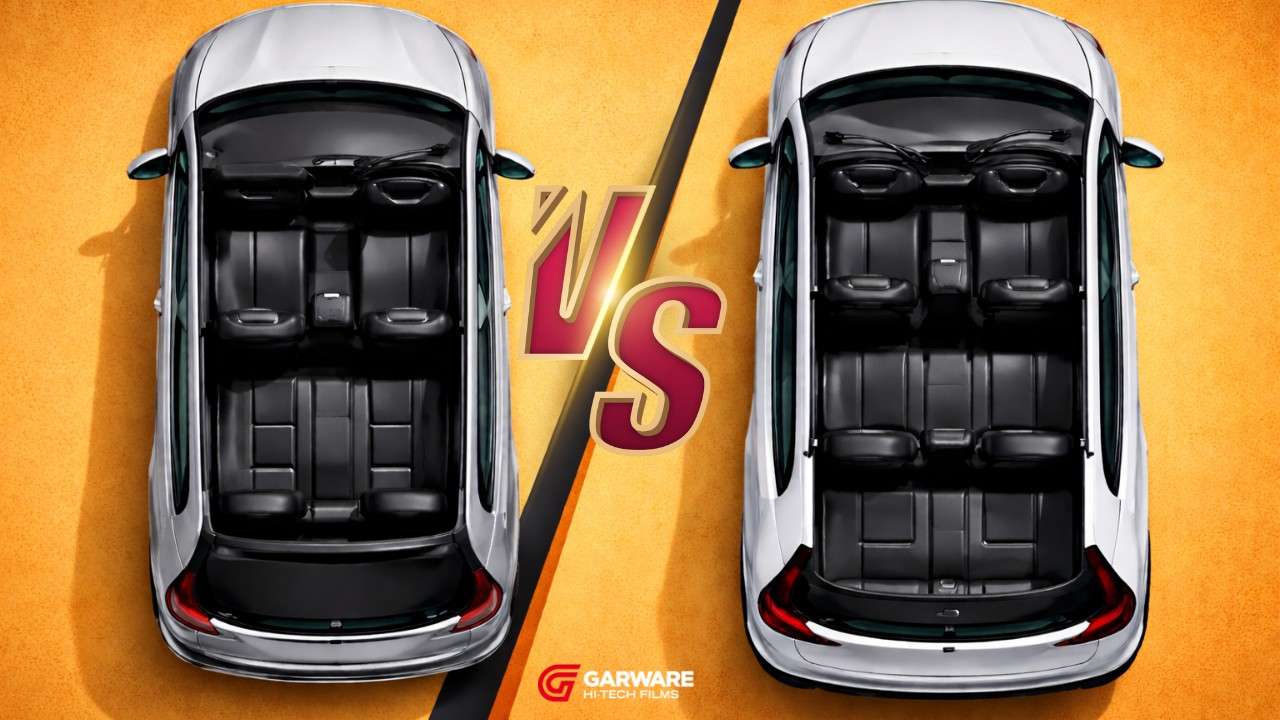
Families today are evolving fast. Nuclear families are common in cities, while joint families dominate in semi-urban and tier-2 locations. With weekend road trips, school runs, ageing parents and rising car ownership aspirations, space has become a crucial need inside a car. This has further led to a dilemma for buyers: 5-seater vs 7-seater cars, which one to purchase?
A 5-seater car is practical for everyday use, while a 7-seater provides extra space and flexibility, which makes the high budget worth it. On paper, the latter seems like a smart choice. In real-world Indian conditions, however, with tight parking, traffic congestion, fuel costs and maintenance, more seats don’t always mean better value.
In this guide, you will find a practical and usage-based 5-seater vs 7-seater car comparison, which will help you choose what actually fits your family and driving habits!
What Is a 5-Seater Car? (Meaning, Seating & Ideal Use)
A 5-seater car is designed to comfortably seat four adults and one child, or two adults and three children, which makes it ideal for small to mid-sized families.
Typical Uses of a 5-Seater Car
-
Daily office commute
-
School runs
-
Weekend city drives
-
Occasional highway trips
Who Should Buy a 5-Seater Car?
-
Nuclear families
-
First-time car buyers
-
Urban users
-
Budget-conscious buyers
Most hatchbacks, sedans, compact SUVs and mid-size SUVs are a part of this category. These cars prioritise ease of driving, fuel efficiency and manageable ownership costs.
What is a 7-Seater Car? (Meaning, Seating & Ideal Use)
A 7-seater car offers three rows of seating, with the third row typically folding flat when not in use.
Third-Row Seating in 7-Seater Cars: Comfort Reality Check
-
Designed mainly for children or short-distance adult travel.
-
A 7-seater car's disadvantage is that there is limited legroom and headroom in most models.
-
Best used occasionally rather than daily.
7-Seater MPV vs SUV: Which Offers Better Space?
-
MPVs focus on cabin space and comfort (better third-row usability)
-
7-seater SUVs focus on road presence and versatility, but often compromise on third-row comfort.
5-Seater vs 7-Seater Cars: Key Differences Explained
Let’s take a quick look at the important differences between 5-seater and 7-seater cars.
|
Parameter |
5-Seater |
7-Seater |
|
Seating Capacity |
Up to 5 people |
Up to 7 people |
|
Cabin Space |
Spacious for 4-5 passengers |
Split across 3 rows |
|
Boot spaces (all seats up) |
Larger |
Very limited |
|
Mileage |
Better fuel efficiency |
Slightly lower |
|
Purchase Cost |
Lower |
Higher |
|
Maintenance Cost |
Lower |
Higher |
|
Manoeuvrability |
Easier in city |
More challenging |
|
Parking Convenience |
Easy |
Requires more space |
5-Seater vs 7-Seater Space & Seating Comfort Comparison
Legroom & Headroom: 5-Seater vs 7-Seater
A 5 seater vs 7 seater space comparison will reveal that the former offers more generous legroom per passenger, especially for those sitting in the rear seats.
Is the Third Row in 7-Seater Cars Comfortable?
-
There is usually lesser third row comfort in 7-seater cars, especially for tall adults.
-
Best for kids or the elderly on short drives.
-
Long journeys can feel cramped and tiring.
Adults vs Kids Seating Comfort Comparison
-
5-seater: Comfortable for adults
-
7-seater: The third row is mainly kid-friendly.
Which Is Better for Long Road Trips?
For highway drives, passenger comfort matters more than the number of seats. In this case, 5-seaters win.
Mileage & Performance: 5-Seater vs 7-Seater Cars
There is a major mileage difference between 5-seater and 7-seater cars. Let’s have a look at it:
How Vehicle Weight Affects Mileage
7-seater cars are heavier due to:
-
Larger body
-
Additional seats
-
Stronger suspension
This directly impacts fuel efficiency.
City vs Highway Mileage Comparison
-
A 5 seater vs 7 seater mileage comparison shows that city traffic magnifies fuel consumption in 7-seater cars.
-
On highways, the gap reduces but doesn’t disappear.
Engine Size Differences in 5-Seater vs 7-Seater Cars
7-seaters often require larger engines, which increase fuel and maintenance costs.
Real-World Mileage Difference (km/l)
Expect 1 to 3 km/l lower mileage in comparable 7-seater models.
City Driving vs Highway Use: Which Car Type Performs Better?
5 seater vs 7 seater cars in India both serve differently when it comes to driving on the road or the highway.
Parking Challenges with 7-Seater Cars
-
7-seater cars need wider parking spots.
-
Basement and roadside parking can also be stressful.
Turning Radius & Manoeuvrability Differences
-
The larger turning radius makes taking U-turns harder.
-
Narrow lanes are also challenging to navigate.
Ease of Driving in Indian Traffic
One of the biggest advantages of 5-seater cars is that they are easier to drive and manage in daily traffic.
Highway Stability: 5-Seater vs 7-Seater
7-seaters feel more planted at high-speeds due to size and weight.
Ownership & Maintenance Cost Comparison
Since both cars are of different sizes, they call for different maintenance and ownership costs.
Service & Repair Costs Compared
For example, the maintenance cost of 7-seater cars, especially for labour and parts, will be higher than that of 5-seaters.
Tyres, Spares & Wear-and-Tear Costs
-
Larger tyres mean higher replacement costs.
-
More brake and suspension wear.
Insurance Cost Difference Between 5-Seater & 7-Seater Cars
7-seater cars often attract a higher insurance premium.
Long-Term Cost of Ownership (5–7 Years)
Over 5 to 7 years, a 7-seater will cost noticeably more to own.
Safety Comparison: 5-Seater vs 7-Seater Cars
So, 5 seater or a 7-seater, which is better and safer? Let’s compare:
Does Bigger Size Mean Better Safety?
Larger cars generally offer better crash protection. However, safety ratings matter more than size alone.
Safety Features & Airbags Comparison
Modern 5-seaters now match or exceed 7-seaters in safety tech.
Child Safety & ISOFIX Considerations
ISOFIX, rear-seat comfort and visibility often matter more than seat count.
Highway Safety: Which Is Safer for Families?
Both 5-seater and 7-seater cars can be safe, as long as you drive responsibly and keep the vehicle well-maintained.
Which Is More Practical for Indian Families?
The question of ‘which car is better for a family: a 5-seater or a 7-seater?’ is an important one that needs to be answered.
Joint Family vs Nuclear Family Car Needs
-
Joint families benefit from 7-seaters.
-
Nuclear families rarely use all seven seats.
Is a 7-Seater Worth It for Occasional Use?
Buying a 7-seater for once-a-month usage rarely makes any financial sense.
School Runs vs Family Road Trips: Best Choice
-
A 5-seater is ideal for school or grocery runs.
-
On the other hand, road trips with the extended family call for a 7-seater.
Urban vs Semi-Urban Usage Comparison
Cities favour compact practicality, while semi-urban areas benefit from space.
Value for Money: 5-Seater vs 7-Seater Cars
5-seaters vs 7-seater cars both have different value for money.
Cost vs Actual Usage Frequency
Paying extra for a 7-seater makes sense only if you regularly use all seats.
Features vs Seating Capacity Trade-Off
At the same price:
-
5-seaters offer better features.
-
7-seaters offer more seats but fewer extra features.
Realistic Buying Decision: What Makes Sense?
The value also depends on actual usage, and not emotional buying.
Who Should Buy a 5-Seater Car?
A 5-seater car will suit:
-
Small families
-
Daily city commuters
-
Budget-focused buyers
-
First-time car owners

Who Should Buy a 7-Seater Car?
Buy a 7-seater car if you are:
-
Part of a large or joint family
-
Frequent highway traveller
-
Regularly travel in groups
-
Planning for a long-term family expansion.

How to Protect Your Family Car for Long-Term Use
Whether you buy a 5-seater or 7-seater car, they will see heavy usage over the years, resulting in:
-
Interior wear and tear, with regular spills and stains.
-
Larger vehicles are prone to scratches and parking dents.
-
Windshields and visibility need special care due to the vehicle's size.
In such cases, preventive shielding with Paint Protection Films (PPF) helps maintain comfort, safety and resale value over time, without you needing to change driving habits. While they have more upfront cost, it helps shield your car from paint chips, stains and scratches in the long term! High-quality PPFs, such as the range offered by Garware Hi-Tech Films, offer various films that suit the needs of your car.
Final Verdict: 5-Seater or 7-Seater – Which Should You Choose?
5-seater cars offer ease of use, better mileage and affordability, while 7-seaters provide space and flexibility when genuinely required.
The right choice depends on your family size, usage frequency, driving environment and budget. For most buyers, practical needs should be prioritised over occasional requirements.
FAQs: 5-Seater vs 7-Seater Cars
-
Is a 7-seater car practical for daily city use?
Yes, but only if you regularly need all the seats. Otherwise, it feels bulky. -
Does a 7-seater give lower mileage than a 5-seater?
Yes, since it has extra weight and size, there is a significant mileage difference between a 7-seater and a 5-seater car. -
Is the third row comfortable for adults?
Mostly no, unless you are driving a premium MPV car. -
Which is better for long road trips?
It depends on the passenger count. In such cases, comfort matters more than seat numbers. -
Are 7-seaters harder to park?
Yes. Their large size makes them tough to park in crowded urban areas. -
Is the maintenance cost higher for 7-seater cars?
Yes, it generally is, due to the size and components of the car. -
Can a 5-seater suit a family of five?
Yes. A 5-seater is designed to suit 2 adults and 3 children. -
Which has better resale value?
Both 5-seaters and 7-seaters can have a good resale value if maintained properly. -
Is a 7-seater worth the extra cost?
The 7-seater car is worth the extra cost only if the space is going to be regularly used. -
Which is safer for families?
Safety ratings and features matter more than just the size when it comes to choosing the right car for families.