
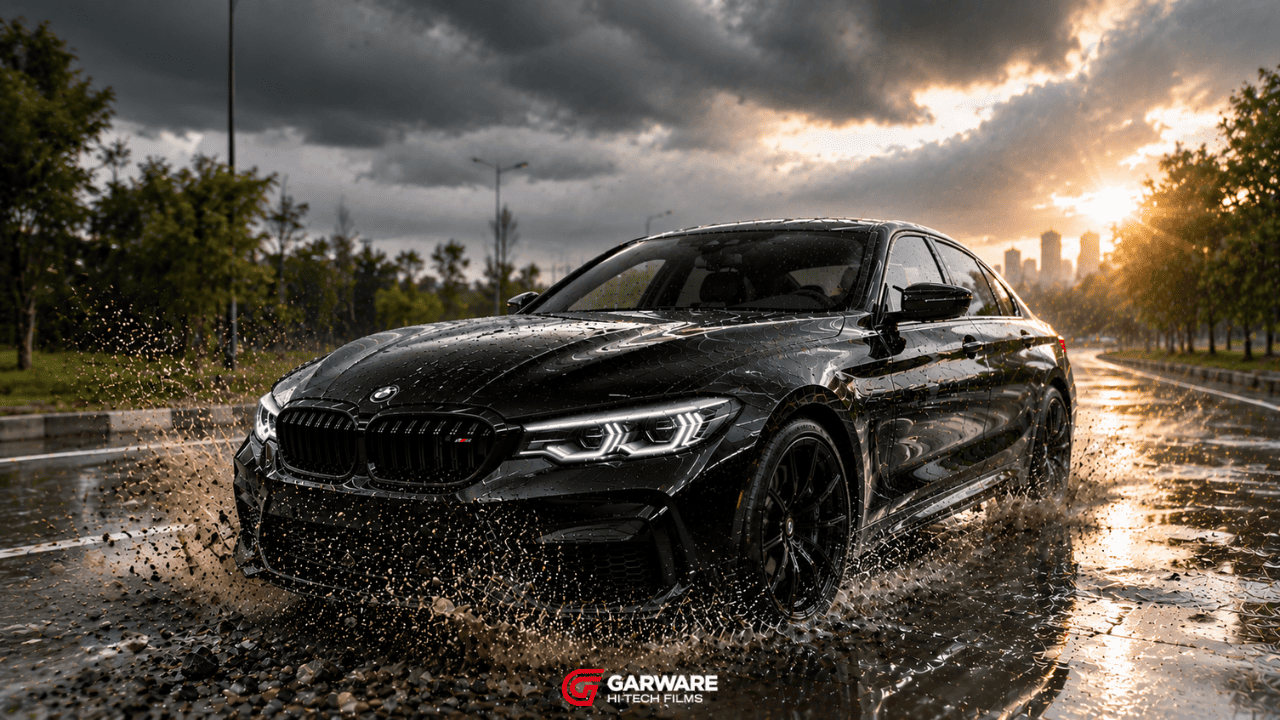
Monsoon roads can be brutal on your car. From flying gravel and muddy water to hidden potholes, the rainy season exposes your vehicle to several forms of damage. Waterlogged streets, broken road surfaces, loose stones, and polluted rainwater create conditions that can quickly affect a vehicle’s appearance and condition.
For Indian car owners, the monsoon season often brings worries about paint chips, scratches, stains, and corrosion. This is one of the main reasons why PPF protection during the monsoon is becoming increasingly popular among those who want to keep their car’s original paint looking its best.
Many drivers wonder, can PPF protect your car from pothole and gravel damage? The answer depends on the type of damage. PPF does an excellent job of protecting the paint from common road hazards, but it cannot prevent mechanical or structural damage caused by deep potholes or heavy impacts.
Let us understand how PPF works during the rainy season, the protection it offers, and how to maximise your vehicle's defence against monsoon road hazards.
Can PPF Protect Your Car from Pothole and Gravel Damage During Monsoon? Quick Answer
PPF protection during monsoon helps protect your car’s paint from gravel, stone chips, road debris, mud, acid rain, and light scratches that are common during the rainy season. Self-healing PPF can also minimise the appearance of minor swirl marks. However, it cannot prevent dents, bent wheels, suspension damage, or tyre punctures caused by deep potholes. For the best protection, PPF should be combined with careful driving and regular vehicle maintenance.
PPF Protection at a Glance
|
Monsoon Threat |
PPF Protection Level |
|
Gravel |
Excellent |
|
Stone Chips |
Excellent |
|
Mud Scratches |
Excellent |
|
Acid Rain |
Excellent |
|
Water Spots |
Moderate |
|
Deep Potholes |
No Protection |
|
Bent Wheels |
No Protection |
|
Suspension Damage |
No Protection |
Why Monsoon Roads Cause Paint Damage to Cars
The rainy season creates several conditions that increase the risk of paint damage.
Loose gravel often accumulates on damaged road surfaces. Vehicles travelling at speed can throw these stones against neighbouring cars, resulting in paint chips and surface marks.
Waterlogged roads create another challenge. Puddles frequently conceal sharp stones, debris, and broken road materials that can strike the lower portions of a vehicle.
Mud can also cause problems for your car's paint. Dirt particles sitting on the surface may create scratches if the car is wiped or washed incorrectly, increasing the chances of swirl marks and other paint defects.
Acid rain and airborne pollutants further contribute to paint deterioration. Polluted rainwater can leave stains and etching marks if left on the surface for extended periods.
Together, these factors make car paint protection during the rainy season an important consideration for vehicle owners.
Can PPF Protect Your Car from Pothole and Gravel Damage?
To answer the question, ‘Does PPF protect against potholes and gravel damage?' It is important to understand its limitations. PPF helps protect the paint from gravel, stone chips, and road debris, but it cannot prevent damage caused by pothole impacts.
What PPF Protects Against
A quality paint protection film for monsoon acts as a sacrificial barrier between the paint and external hazards.
It helps protect the paint from:
-
Gravel impacts
-
Stone chips
-
Road debris
-
Minor scratches
-
Mud-induced swirl marks
-
Acid rain exposure
-
Water splashes carrying contaminants
-
Light scuffs from daily driving
This is why PPF for gravel damage and PPF for stone chip protection are especially useful during the monsoon season.
What PPF Cannot Protect Against
PPF is excellent for protecting the paint, but it cannot protect your car from major impacts.
It cannot prevent:
-
Deep pothole impacts
-
Suspension damage
-
Bent wheel rims
-
Tyre punctures
-
Heavy dents
-
Structural vehicle damage
This is why PPF should be seen as a paint protection solution, not a complete defence against all monsoon-related road hazards.
Monsoon Hazards vs PPF Protection: What Is Covered?
The following comparison provides a clearer understanding of where PPF delivers protection.
|
Monsoon Hazard |
Does PPF Protect? |
|
Gravel |
Yes |
|
Stone Chips |
Yes |
|
Mud Scratches |
Yes |
|
Minor Scuffs |
Yes |
|
Acid Rain |
Yes |
|
Water Spots |
Partial |
|
Deep Potholes |
No |
|
Bent Rims |
No |
|
Suspension Damage |
No |
|
Tyre Punctures |
No |
This comparison shows that PPF during monsoon does a great job of protecting your car's paint, while parts such as the tires, wheels, and suspension need separate protection and maintenance.
How Paint Protection Film Helps Protect Cars During Monsoon
Several advanced features make PPF highly beneficial during rainy weather.
Protection Against Gravel and Stone Chips
One of the biggest advantages of PPF for Indian road conditions is its ability to absorb minor impacts from flying stones and road debris.
It acts as a shield over the paint, helping to protect it from chips and minor damage. Parts like the front bumper, bonnet edge, and fenders are more exposed to road debris and benefit the most from this protection.
As a result, owners experience better gravel protection, improved stone chip resistance, and reduced paint repair costs.
Self-Healing Protection Against Minor Scratches
Modern self-healing PPF contains specialised elastomeric layers that allow light scratches to disappear when exposed to heat.
Light scratches and swirl marks can fade away when the film is exposed to heat from the sun or warm water. This helps the car continue looking clean and well-maintained throughout the rainy season.
The incorporation of self-healing technology is one of the key reasons premium PPF products continue to gain popularity.
Protection Against Acid Rain and Road Contaminants
Rainwater in cities often contains pollutants that can gradually damage a car’s paint.
PPF provides effective acid rain protection for cars by creating a protective layer between harmful contaminants and the paint.
This helps reduce chemical stains, lowers the risk of oxidation, and keeps the paint looking newer for longer.
This protection is especially useful in areas with high pollution levels.
Hydrophobic Water Repellency
Many premium PPF products come with hydrophobic properties that help water slide off the surface more easily during rain.
The hydrophobic PPF benefits include:
-
Better water beading
-
Less mud sticking to the surface
-
Easier cleaning after rain
-
Reduced dirt build-up
This form of hydrophobic surface protection helps keep the vehicle cleaner and simplifies routine maintenance during the monsoon months.
Together, these PPF protection benefits prove effective during challenging weather conditions.
Which Parts of a Car Need PPF Protection During Monsoon?
Certain sections of a vehicle face greater exposure to road debris and flying stones.
When evaluating PPF vs road debris damage, the areas that benefit most from protection include:
-
Front bumper
-
Bonnet leading edge
-
Side mirrors
-
Fender edges
-
Rocker panels
-
Rear bumper loading area
Protecting these high-risk zones significantly improves overall road debris protection and paint chip prevention.
Focusing on these vulnerable surfaces helps maximise the value of the investment.
Why Choosing a High-Quality PPF Is Important During Monsoon
Not all PPF products offer the same level of protection.
Premium films, such as those from Garware Hi-Tech Films, generally provide better optical clarity, stronger durability, and superior resistance to staining. They also deliver more effective self-healing performance and improved protection against yellowing caused by prolonged environmental exposure.
A high-quality scratch-resistant film maintains its appearance for longer periods and continues to provide reliable protection throughout multiple monsoon seasons.
Investing in a reputable PPF product often delivers better long-term value and reduces maintenance concerns.
Is PPF Worth Installing Before the Monsoon Season?
For many vehicle owners, the answer is yes.
Installing PPF during monsoon preparation helps prevent seasonal paint damage before it occurs. The film reduces the likelihood of stone chips, scratches, and contamination-related defects that may otherwise require expensive repairs.
It also helps preserve the vehicle's appearance, supports resale value, and provides greater peace of mind when driving through rough weather conditions.
While it cannot prevent tyre damage from potholes, suspension damage, or issues requiring underbody protection, it remains one of the most effective solutions for protecting a vehicle's exterior finish.
Key Takeaways: Can PPF Protect Your Car During Monsoon?
The answer to ‘Can PPF protect your car from pothole and gravel damage?’ depends on the type of damage being considered.
PPF is highly effective against gravel strikes, stone chips, road debris, acid rain, muddy contaminants, and minor scratches that commonly occur during the rainy season. It offers valuable monsoon car paint protection and helps preserve the factory finish for years.
At the same time, PPF cannot protect against damage caused by deep potholes, such as bent wheels, suspension problems, tyre punctures, or major dents. These issues can only be reduced through careful driving and proper vehicle maintenance.
For maximum protection, combine PPF protection during monsoon with regular washing, careful driving, and routine vehicle checks. This helps keep your car better protected during the rainy season.
FAQs About PPF Protection During Monsoon
1. Can PPF protect against pothole damage during the monsoon?
No. PPF protects the paint surface but cannot prevent damage to wheels, tyres, suspension, or other components caused by potholes.
2. Does PPF prevent gravel and stone chips from damaging car paint?
Yes. PPF acts as a protective layer that helps reduce paint damage from gravel, stone chips, and road debris.
3. Is PPF effective for protecting cars during the rainy season?
Yes. It helps protect the paint from mud, road grime, water stains, and other common monsoon-related contaminants.
4. Can PPF protect car paint from acid rain and muddy water?
Yes. PPF creates a barrier that helps limit direct contact between the paint and harmful contaminants such as acid rain and muddy water.
5. What are the limitations of PPF during monsoon driving?
PPF cannot prevent dents, tyre punctures, bent wheels, suspension damage, or accidents caused by poor road conditions.
6. Which parts of a car should be protected with PPF before the monsoon?
The front bumper, bonnet edge, side mirrors, fenders, rocker panels, and rear bumper are usually the most vulnerable areas.
7. How does self-healing PPF help during monsoon conditions?
Self-healing PPF can reduce the appearance of light scratches and swirl marks that may occur during washing and daily driving.
8. Is PPF worth installing before the monsoon season?
For many car owners, yes. It helps preserve the paint finish and makes cleaning and maintenance easier during the rainy months.