
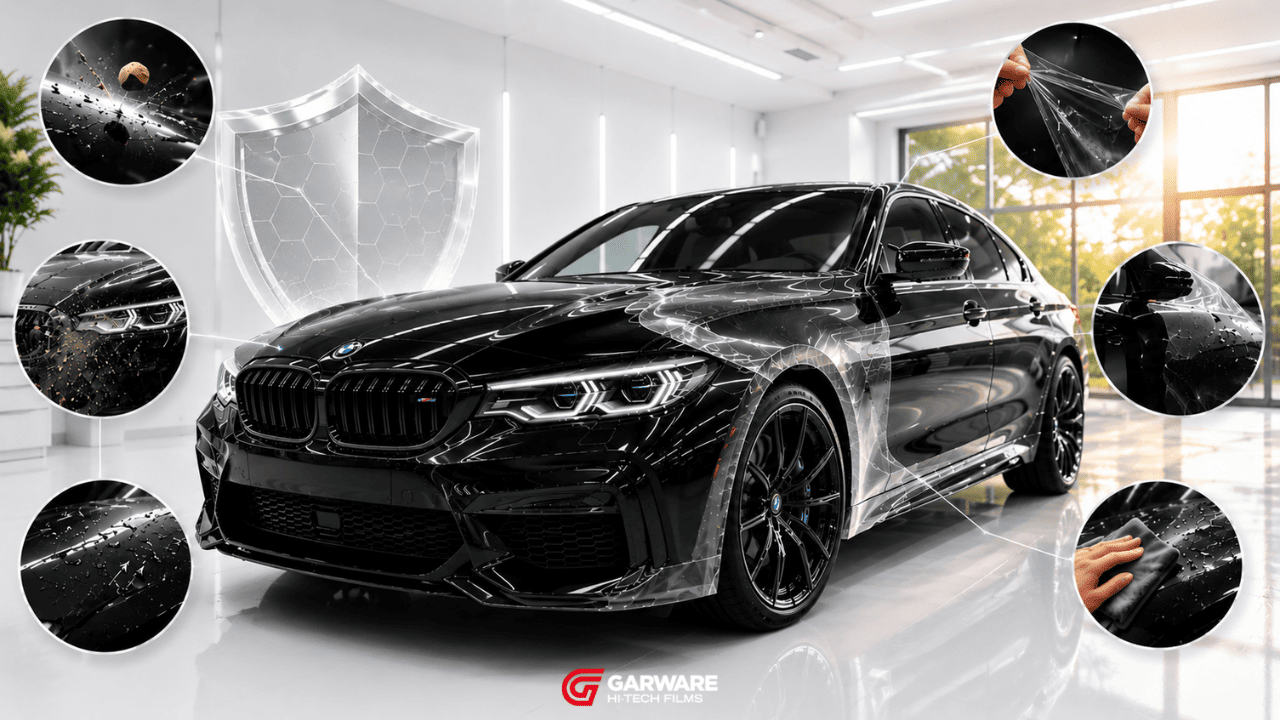
Your new car will never again be as perfect as it is on delivery day, which is exactly why protecting the paint early matters.
The popularity of PPF for new cars has increased significantly across India as more vehicle owners focus on preserving their car's paint and appearance for the long term. From the moment a new car hits the road, it is exposed to stone chips, scratches, UV rays, bird droppings, and swirl marks that can gradually affect its finish. Modern factory paint is also thinner than before due to environmental regulations, making it more susceptible to everyday wear and tear.
These factors make new-car paint protection worth considering right from the day of delivery. Among the available options, Paint Protection Film is one of the most effective ways to keep the factory paint protected and looking good for years.
Let us explore the reasons why PPF is important for new cars and why it is considered one of the smartest long-term investments for vehicle owners.
Why Is PPF Important for New Cars?
PPF for new cars is important because it creates a protective barrier over the vehicle's paint, helping defend against scratches, rock chips, UV rays, and road debris. Advanced self-healing PPF technology can minimise the appearance of minor scratches and swirl marks, helping the paint maintain its original finish.
Some of the major PPF protection benefits include preserving the showroom appearance, reducing repainting costs, supporting better resale value, and providing reliable protection against challenging weather and driving conditions. For many owners wondering, Should I get PPF on a new car, the answer often depends on how long they plan to keep the vehicle and how much they value paint preservation.
|
Benefit |
Advantage |
|
Rock Chip Protection |
Preserves factory paint |
|
Scratch Resistance |
Reduces daily wear |
|
Self-Healing |
Removes light marks |
|
UV Protection |
Prevents fading |
|
Chemical Resistance |
Prevents stains |
|
Resale Value |
Improves buyer appeal |
Why New Cars Need Paint Protection from Day One
Many car owners think paint damage happens only after years of driving. In reality, it can start much sooner.
Even a single highway trip can expose the paint to small stones, gravel, and other road debris. Daily driving in city traffic can also lead to minor scratches, bumper scuffs, and swirl marks from regular washing.
Sunlight, pollution, moisture, and environmental contaminants can gradually affect unprotected paint. Installing paint protection film for new cars early helps protect the surface before these issues become permanent.
Protecting the factory finish from the beginning is often easier and less expensive than fixing paint damage later.
Top Reasons Why PPF Is a Must-Have for New Cars
Several practical advantages explain why more owners are investing in paint protection film for new cars.
Protection Against Rock Chips and Road Debris
Roads regularly expose vehicles to loose stones, gravel, and debris.
A quality PPF layer absorbs much of the impact before it reaches the paint surface. This helps reduce paint chipping, particularly on high-impact areas such as the bonnet, bumper, fenders, and side mirrors.
For owners frequently driving on highways, this remains one of the most valuable benefits of PPF for cars.
Prevents Scratches and Swirl Marks
Minor scratches are often unavoidable during everyday ownership.
Parking areas, shopping trolleys, accidental brushing against the vehicle, and improper washing techniques can all leave visible marks on the paint. A premium scratch protection film for cars provides an additional layer that absorbs many of these minor impacts.
It also helps minimise swirl marks that commonly develop after repeated washing.
Self-Healing Technology
One of the most impressive features of modern self-healing PPF is its ability to repair minor surface imperfections.
Minor scratches and swirl marks can fade away when exposed to sunlight or warm water. This helps the film maintain a smooth and glossy finish without frequent polishing.
As a result, the car keeps its fresh, well-maintained look for a longer time.
UV and Oxidation Resistance
Constant exposure to strong sunlight can cause vehicle paint to fade and lose its shine over time.
PPF helps block harmful UV rays, allowing the paint to retain its colour and clarity for longer. It also slows down oxidation, which can make the paint look dull as the years pass.
This makes PPF especially valuable in regions that experience intense sunlight throughout the year.
Chemical and Stain Protection
Vehicle paint is constantly exposed to harmful contaminants.
PPF helps protect against:
-
Bird droppings
-
Tree sap
-
Bug splatter
-
Acid rain
-
Road contaminants
This additional layer reduces the risk of staining and paint etching that may otherwise require expensive correction work.
Helps Maintain Resale Value
Keeping the original factory paint in good condition can help maintain the car's resale value.
Many buyers see original paint as a sign that the vehicle has been well cared for. A car with fewer scratches, chips, and visible paint damage usually leaves a better impression during inspections.
Among the most overlooked PPF resale value benefits is the ability to preserve the vehicle's factory-finished appearance over the years.
Reduces Long-Term Repair Costs
Paint correction, touch-ups, and repainting can become expensive over time.
PPF helps minimise many common causes of paint damage, reducing the need for frequent cosmetic repairs. The investment made today can often offset future maintenance expenses.
These advantages make PPF a premium paint protection solution for long-term vehicle ownership.
Which Parts of a New Car Need PPF the Most?
The areas most exposed to stone chips, scratches, and road debris should be prioritised for PPF installation:
-
Front bumper – Faces the highest impact from stones, insects, and road debris.
-
Bonnet – Prone to chips and marks from highway driving.
-
Side mirrors – Frequently exposed to scratches and flying debris.
-
Fender edges – Vulnerable to damage from loose gravel and road particles.
-
Door edges – Help prevent chips and scratches from accidental contact.
-
Rocker panels – Protect lower side sections from mud, stones, and road spray.
Why PPF Is Ideal for Indian Driving Conditions
Indian roads can be tough on a vehicle's paint.
Dust, gravel, construction debris, and heavy traffic can cause everyday wear and tear. Hot summers increase exposure to harsh sunlight, while monsoons bring moisture, mud, and other contaminants that can affect the paint over time.
PPF for Indian road conditions offers protection against many of these everyday threats. Whether driving through crowded city streets or travelling long distances on highways, the protective film helps reduce the impact of environmental and road-related damage.
These qualities make it one of the best protections for new car paint available today.
What Is Self-Healing PPF and How Does It Work?
Modern PPF technology goes beyond simple paint protection.
The film contains an advanced elastomeric top layer designed to recover from minor scratches and surface marks. When exposed to heat from sunlight, warm water, or environmental warmth, the affected area gradually returns to its original form.
This self-repairing capability reduces the need for polishing and helps preserve a smoother finish over time. It is one of the primary reasons why self-healing PPF continues to gain popularity among premium vehicle owners.
The result is better appearance retention with less ongoing maintenance.
Does PPF Change the Original Appearance of a Car?
Many new car owners worry that protective films may alter the appearance of their vehicle.
High-quality PPF is optically clear and designed to remain virtually invisible after installation. Ceramic coating is often discussed alongside PPF vs ceramic coating because both are used to protect a vehicle's finish, although they work in different ways.
Several manufacturers also offer matte and satin variants for owners seeking a customised appearance. In many cases, PPF can even enhance gloss levels without requiring any repainting.
This allows owners to protect their investment while preserving the vehicle's original styling.
Why You Should Install PPF Immediately After Buying a New Car
Timing plays an important role in paint protection.
Installing PPF immediately after vehicle delivery ensures that the film protects factory-fresh paint before chips, scratches, and contaminants have an opportunity to cause damage.
Once paint defects occur, they often require correction before film installation. Early protection eliminates this concern and allows the film to safeguard the paint from the beginning.
This is one of the strongest answers to the question, Should I get PPF on a new car?
Why Choosing a High-Quality PPF Is Important
Not all Paint Protection Films perform the same way.
Premium PPF offers a clearer finish, better durability, stronger stain protection, and improved self-healing capabilities. Trusted brands such as Garware Hi-Tech Films are known for delivering these performance benefits. On the other hand, low-quality films may discolour, become less clear, or lose their effectiveness over time.
Choosing a trusted installer and a reputable film brand ensures reliable long-term paint protection for cars and maximises the value of the investment.
Quality materials ultimately determine how effectively the film performs over the years.
Key Takeaways: Is PPF Worth It for New Cars?
A new car deserves protection from the very beginning, and new car paint protection plays an important role in preserving its finish. PPF helps keep the paint in better condition, maintains the overall look of the vehicle, and can contribute to a better resale value over time.
One of the biggest benefits of PPF for cars is that it helps protect against common paint damage caused by scratches, stone chips, sunlight, and road contaminants. This can mean fewer paint-related repairs in the future.
For car owners wondering, ‘Is PPF worth it for new cars?’ Many owners consider it a practical investment. Applying PPF early helps protect the original factory paint and keeps the car looking well-maintained for years. For owners planning to keep their vehicle for several years, installing PPF immediately after delivery is often the most effective way to preserve the factory finish and minimise future paint correction costs.
FAQs About PPF for New Cars
1. Why is PPF important for new cars?
PPF helps protect your car's paint from scratches, stone chips, UV rays, and everyday wear, helping it stay newer for longer.
2. Should I install PPF immediately after buying a new car?
Yes, installing PPF early helps protect the factory-fresh paint before any damage or imperfections occur.
3. Does PPF protect against rock chips and scratches?
PPF acts as a protective barrier that helps reduce damage from small stones, road debris, and minor scratches.
4. What is self-healing PPF and how does it work?
Self-healing PPF can make light scratches and swirl marks disappear when exposed to heat from sunlight or warm water.
5. How long does PPF last on a car?
A high-quality PPF can typically last between 5 and 10 years, depending on the product and maintenance.
6. Does PPF affect the original paint finish of the car?
No, quality PPF is designed to be nearly invisible and helps preserve the original look of the paint.
7. Can PPF help increase a car’s resale value?
By keeping the paint in better condition, PPF can help maintain the vehicle's appearance and resale appeal.
8. Is PPF worth the cost for daily-driven cars?
For many owners, PPF is a worthwhile investment because it helps reduce paint damage from regular driving conditions.
9. Which parts of a new car should get PPF protection first?
The front bumper, bonnet, fenders, side mirrors, and door edges are usually the first areas recommended for protection.