
.jpeg)
Choosing between the Tata Harrier and Tata Safari is not just a question of features or price. It is a decision that will define your daily drive, your family’s comfort, and even your weekend adventures for years to come. These two SUVs share the same platform, the same engine, and the same badge, but they serve vastly different lifestyles. One is a driver’s machine: sharp, agile, designed for those who love to be behind the wheel. The other is a family command center: spacious, commanding, built to carry more than just passengers; it carries responsibilities.
In this comprehensive comparison, we deliver hard data, real ownership insights, and practical advice that will help you choose the SUV that truly fits your life.
Tata Harrier Vs Safari: Side-By-Side Comparison Table
| FEATURE | TATA HARRIER | TATA SAFARI | KEY TAKEAWAY |
|---|---|---|---|
| Starting Price (Ex-Showroom) | ₹15.49 Lakh | ₹16.19 Lakh | Safari costs ₹70,000 more |
| Engine | 2.0L Kryotec Turbo Diesel | 2.0L Kryotec Turbo Diesel | Identical powertrain |
| Power / Torque | 170 PS / 350 Nm | 170 PS / 350 Nm | Same performance |
| Transmission | 6MT / 6AT | 6MT / 6AT | Smooth shifts on both |
| Seating Capacity | 5 | 6 (Captain) or 7 (Bench) | Safari = family hauler |
| Length | 4,598 mm | 4,668 mm | Safari is 70mm longer |
| Wheelbase | 2,741 mm | 2,741 mm | Same cabin space foundation |
| Ground Clearance | 205 mm | 205 mm | Equal off-road readiness |
| Boot Space | 425 Litres | 73L (3rd row up) / 425L (folded) | Harrier wins for luggage |
| ARAI Mileage | 16.8 kmpl (MT) / 14.6 kmpl (AT) | 16.3 kmpl (MT) / 14.0 kmpl (AT) | Harrier slightly more efficient |
| Safety Rating | 5-Star Global NCAP | 5-Star Global NCAP | Both equally safe |
| ADAS (Top Variants) | Yes (Fearless+ and Dark) | Yes (Fearless+ and Dark) | Lane Keep, AEB, ACC on both |
| Touchscreen | 10.25 inch + Wireless Android Auto | 10.25 inch + Wireless Android Auto | Identical tech |
| Sunroof | Panoramic (Top Variants) | Panoramic (Top Variants) | Both feel premium |
Key Differences: Harrier Vs Safari
Seating & Size: The Dealbreaker
This is where the two SUVs truly diverge.
The Harrier is strictly a five-seater. Its rear bench is wide and supportive, with generous knee room (320mm). It is perfect for couples, singles, or small families who prioritize comfort over capacity.
The Safari, by contrast, offers two configurations: a six-seater with captain seats (available from XT+ variant) or a seven-seater with a bench. The captain seats add luxury and aisle access, making it ideal for families with elders or children. The third row is best suited for kids or short trips.
Real-World Test: With all seats in use, the Safari’s boot holds only two small bags. Fold the third row, and it matches the Harrier’s 425 liters. If you need to carry seven people and their luggage, plan carefully.
Design: Sporty Swagger vs. Commanding Presence
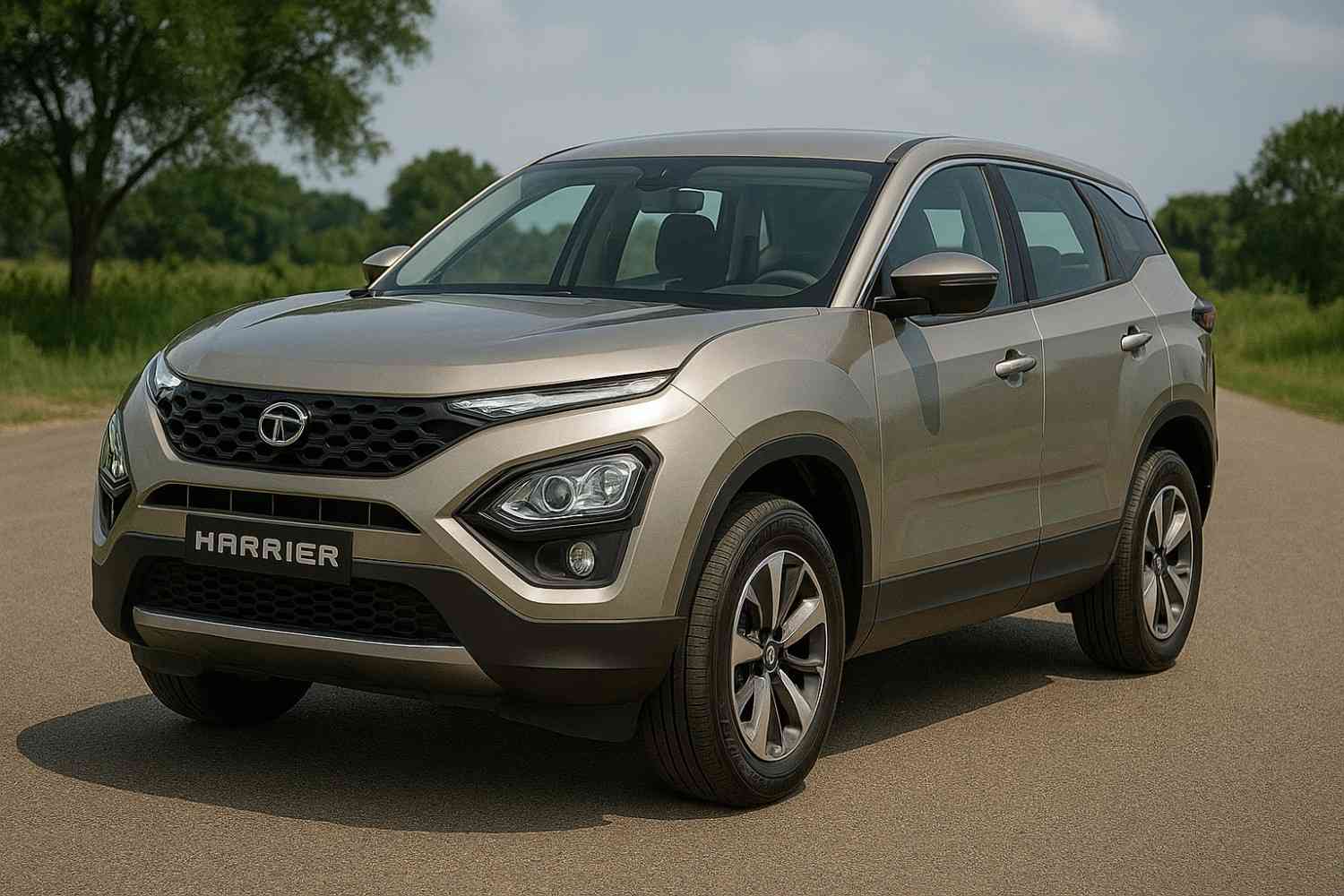
The Harrier features a lower roofline and coupe-inspired silhouette, with an aggressive front grille. It feels like a European crossover, with sleek, modern designs that are ideal for urban environments.
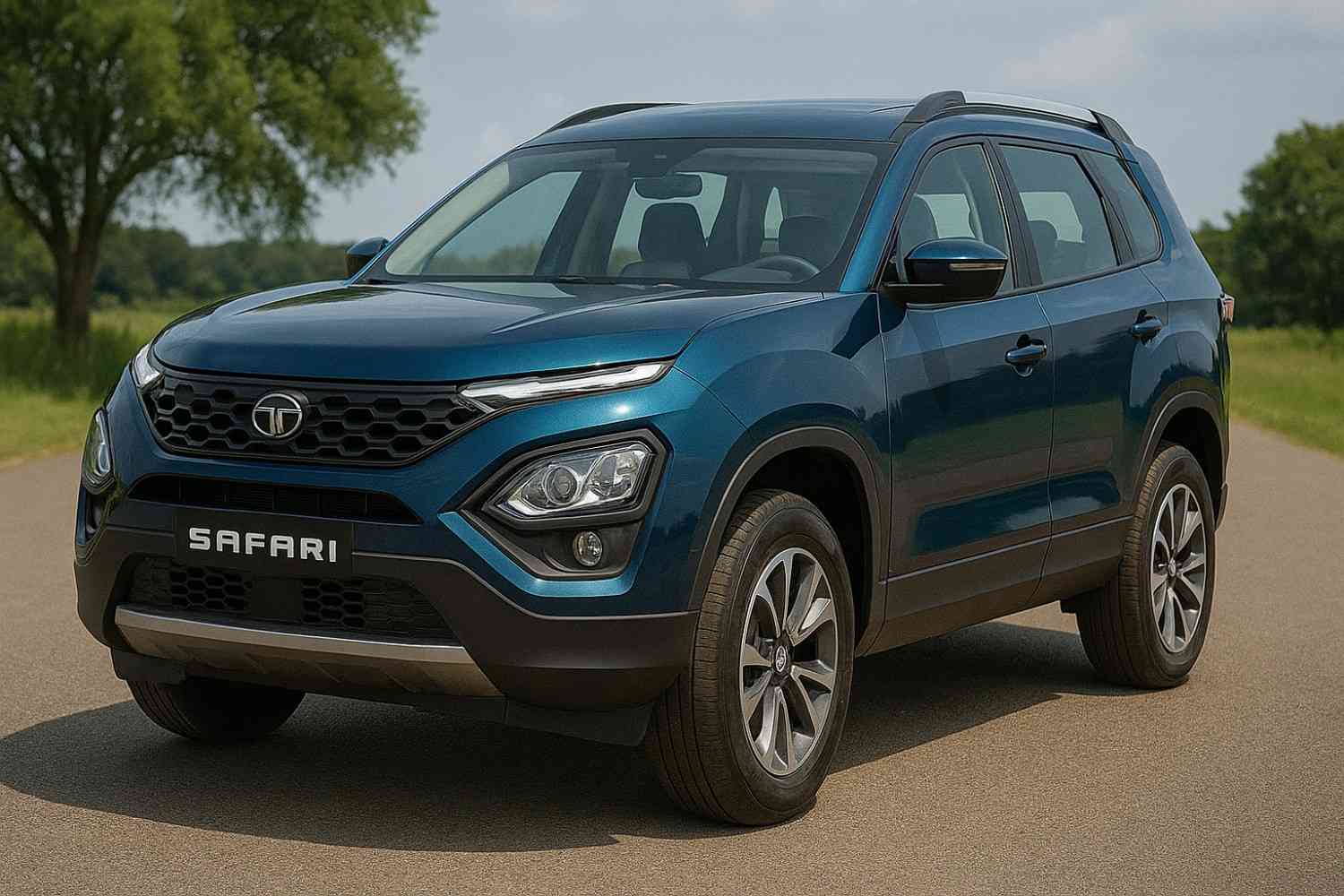
The Safari carries a taller, boxier stance with a vertical grille and squarer wheel arches. It projects authority and presence, better suited for highway cruising and rough terrain.
Pro Tip: The Harrier looks especially sharp in the Dark edition with blackout trim. The Safari commands attention in Royal Gold or Oberon Black.
Interior & Features: Same Tech, Different Feel
Both SUVs share the same 10.25-inch touchscreen, JBL audio system, wireless charging, and digital cockpit. But the experience inside is tailored to their purpose.
The Harrier offers a driver-focused cockpit with sportier seats and a flat-bottom steering wheel. It feels like a performance machine, perfect if you are one who enjoys driving.
The Safari creates a lounge-like ambiance. With optional captain seats, rear AC controls, and ambient lighting, it prioritizes passenger comfort. It even includes rear sunshades and second-row armrests: features that are absent in the Harrier.
Safety Note: The Safari offers rear curtain airbags and blind spot monitoring in top variants: a meaningful advantage for families.
Performance & Mileage: Twin Engines, Slightly Different Tuning
Both are powered by the same 2.0L diesel engine producing 170 PS and 350 Nm of torque. But real-world behavior varies due to weight and tuning.
The Harrier, being 65 kg lighter, feels slightly quicker and more agile in city traffic. Its lower center of gravity also enhances highway stability.
The Safari, heavier and softer-sprung, feels more planted at high speeds and absorbs bad roads with greater comfort. It has a marginal edge in low-end torque delivery.
Real Mileage:
-
Harrier: approximately 13.5 kmpl (city AT), 17.5 kmpl (highway)
-
Safari: approximately 12.8 kmpl (city AT), 16.5 kmpl (highway)
Safety: Equally Strong, But Safari Adds Extras
Both SUVs earned a 5-Star Global NCAP safety rating. Standard features include six airbags, ESC, hill hold assist and a 360-degree camera.
However, the Safari goes further in higher trims, offering:
-
Rear curtain airbags
-
Blind spot monitor
-
Rear cross-traffic alert
-
Tyre pressure monitoring system (standard across all variants)
If rear passenger safety is a top priority, the Safari holds a slight but meaningful advantage.
Which One Should You Choose: Harrier Or Safari?
Choose the Tata Harrier if you:
-
Are a solo driver, couple or small family with no need for third-row seating
-
Prefer sporty, car-like handling and agility in urban environments
-
Want maximum boot space without compromise
-
Prioritize slightly better fuel efficiency
-
Appreciate a coupe-inspired design that stands out visually
-
Do not foresee needing to carry more than four passengers regularly
Ideal For: Young professionals, driving enthusiasts, urban commuters and style-conscious buyers.
Choose the Tata Safari if you:
-
Have a family of four or more, or frequently travel with elders and children
-
Need flexible seating configurations (six or seven seats) for school runs or vacations
-
Value captain seats, rear comfort and lounge-like ambiance
-
Prioritize rear passenger safety features such as curtain airbags and sunshades
-
Prefer a commanding, upright driving position for better visibility
-
Are willing to trade some boot space and efficiency for people-carrying capability
Ideal For: Families, joint families, weekend road-trippers and chauffeur-driven users.
Protect Your Investment From Day One
Whether you choose the Harrier’s dynamic silhouette or the Safari’s family-first practicality, one truth remains: Indian roads are tough. They are full of stone chips, UV-induced fading, bird droppings, and minor abrasions that can degrade your vehicle’s finish within months, silently eroding its aesthetic appeal and long-term resale value.
This is where Paint Protection Film (PPF) becomes essential. Not as an accessory, but as an important long-term investment. A professionally applied film from Garware Hi-Tech Films creates an invisible, self-healing barrier that preserves your SUV’s factory paint, resists swirls and chips, and maintains that showroom gloss for years. Engineered specifically for Indian weather and road conditions, and backed by five to seven year warranties, Garware’s PPF ensures your Harrier or Safari retains its visual pride and commands a stronger resale value when the time comes to upgrade.
We recommend discussing PPF installation with your dealer before taking delivery. Applying it on a perfectly clean, unblemished surface yields the best results, and the best return on your investment.
Ownership Cost Comparison (5-Year Estimate)
| COST FACTOR | TATA HARRIER (AVG/YEAR) | TATA SAFARI (AVG/YEAR) | NOTES |
|---|---|---|---|
| Insurance | ₹42,000 | ₹48,000 | Safari costs more due to size |
| Service (Avg) | ₹18,000 | ₹19,500 | Safari’s extra seats = more wear |
| Tires (Set of 4) | ₹28,000 | ₹30,000 | Safari uses slightly larger tires |
| Fuel (15,000 km/yr) | ₹89,000 (AT) | ₹94,000 (AT) | Based on ₹95/liter diesel |
| Total/Year | ₹1,77,000 | ₹1,91,500 | Safari costs approx. ₹14,500 more/year |
Final Verdict: Harrier Vs Safari
There is no universally “better” SUV. There is only the right SUV for your lifestyle.
Choose the Harrier if you value driving dynamics, design, boot space, and efficiency, and rarely carry more than four people.
Choose the Safari if your priority is family comfort, flexible seating, rear luxury, and long-distance cruising, even if it costs slightly more to run.
FAQs:
-
Which is better: the Tata Harrier or the Tata Safari?
It depends on your lifestyle and driver's needs. Choose Harrier for driving fun and style, and the Safari for family space and comfort. -
What is the mileage comparison between the Tata Harrier and the Tata Safari?
Harrier delivers slightly better mileage, around 0.5 to 1 kmpl more than Safari in real-world city and highway driving. -
What is the price difference between the Tata Harrier and the Tata Safari in India?
Safari starts around ₹70,000 higher than Harrier and stays costlier across all comparable variants. -
Which is more comfortable: the Tata Harrier or the Tata Safari?
Safari is more comfortable for families and rear passengers, especially with captain seats; Harrier prioritizes driver comfort and sporty ergonomics. -
How do the engines of the Tata Harrier and Tata Safari compare?
They share the same 2.0L Kryotec diesel engine: 170 PS and 350 Nm, with identical performance and refinement. -
Which is more reliable: the Tata Harrier or the Tata Safari?
Both are equally reliable; they are built on the same platform, with proven mechanicals and strong after-sales support across India. -
Which SUV is better for family use – Tata Harrier or Tata Safari?
Safari is clearly better for families, thanks to its 6 or 7-seat flexibility, rear comfort features, and added safety tech like curtain airbags. -
What are the main differences between the Tata Harrier and the Tata Safari?
The core differences remain seating (5 vs 6/7), design (sporty vs commanding), boot space (425L vs 73L with 3rd row up), and rear luxury features. -
How do the ground clearance specs of the Tata Harrier and Tata Safari compare?
Both offer identical 205mm ground clearance. They are equally capable on rough roads and speed breakers. -
Which has more boot space: the Tata Harrier or Tata Safari?
Harrier offers more usable boot space (425L) since Safari’s third row eats into luggage room, unless you fold it down to match Harrier’s capacity.