
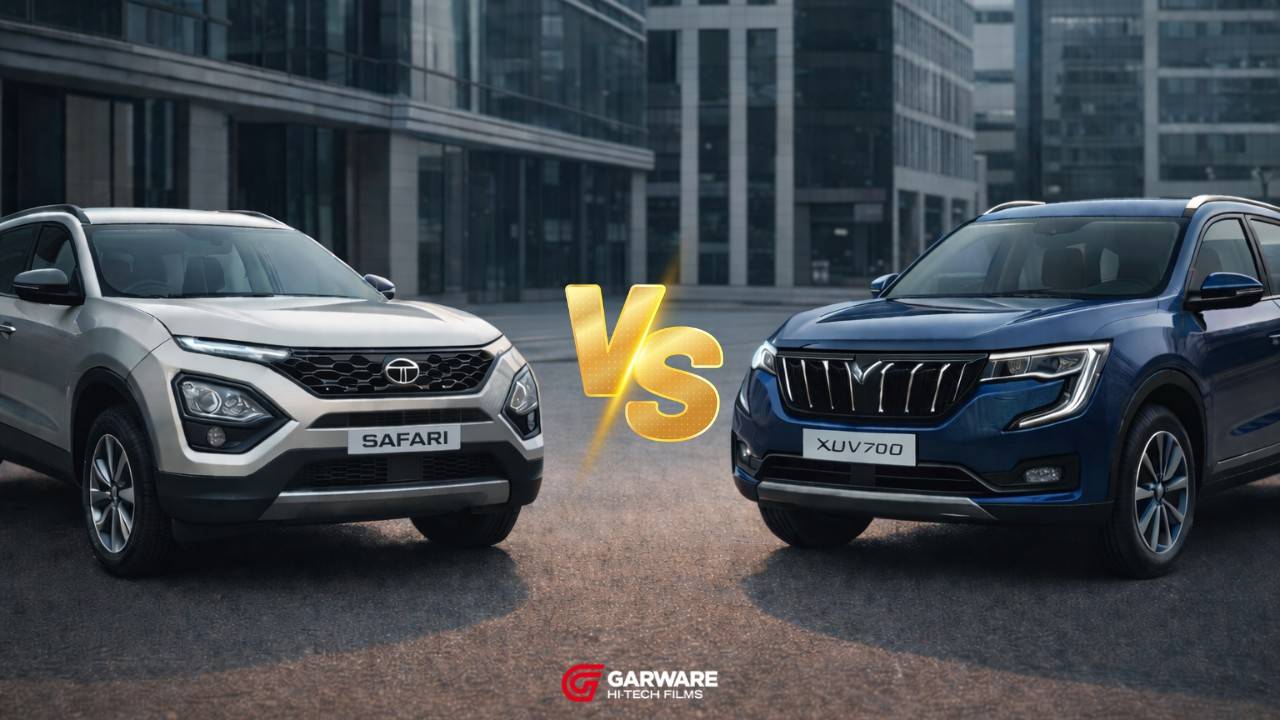
Imagine loading your family of seven: kids, grandparents, luggage, snacks, and all, for a weekend road trip. The right SUV doesn’t just carry everyone; it makes the journey calm, comfortable, and confident. In India’s competitive mid-size SUV segment, the Mahindra XUV700 and Tata Safari stand as the two most compelling choices for families seeking space, safety, and sophistication. This XUV700 vs Safari comparison cuts through the noise to help you decide which one truly aligns with your driving habits, priorities, and lifestyle, whether you’re navigating city traffic or cruising on national highways.
If you are confused between the XUV700 and Safari for family use, seating comfort, and long-term ownership, this comparison answers every practical question.
Mahindra XUV700 vs Tata Safari: Quick Family SUV Comparison
Here’s a quick side-by-side comparison of the Mahindra XUV700 vs Tata Safari as family SUVs, highlighting differences in price, seating options, performance, and everyday usability.
|
Feature |
Mahindra XUV700 |
Tata Safari |
|
Starting Price |
₹13.99 Lakh |
₹14.99 Lakh |
|
Seating Options |
5-seater / 7-seater |
6-seater / 7-seater |
|
Engine Options |
2.0L turbo petrol, 2.2L diesel |
2.0L turbo diesel only |
|
Transmission |
6/7-speed manual, 6-speed automatic |
6-speed manual, 6-speed automatic |
|
Max Power |
Up to 200 bhp (petrol), 185 bhp (diesel) |
170 bhp (standard), 200 bhp (Gold) |
|
Max Torque |
375 Nm (diesel), 300 Nm (petrol) |
350 Nm (standard), 400 Nm (Gold) |
|
ARAI Mileage (Diesel) |
~14–15 kmpl (city), ~16–17 kmpl (highway) |
~12 kmpl (city), ~14 kmpl (highway) |
|
Key Strength |
Technology, ADAS, modern features |
Cabin space, third-row comfort, ride quality |
|
Drivetrain |
FWD / AWD |
FWD / AWD |
|
Best For |
Tech-savvy urban families |
Long-distance, highway-focused families |
Mahindra XUV700 Overview: Strengths for Urban Family Use
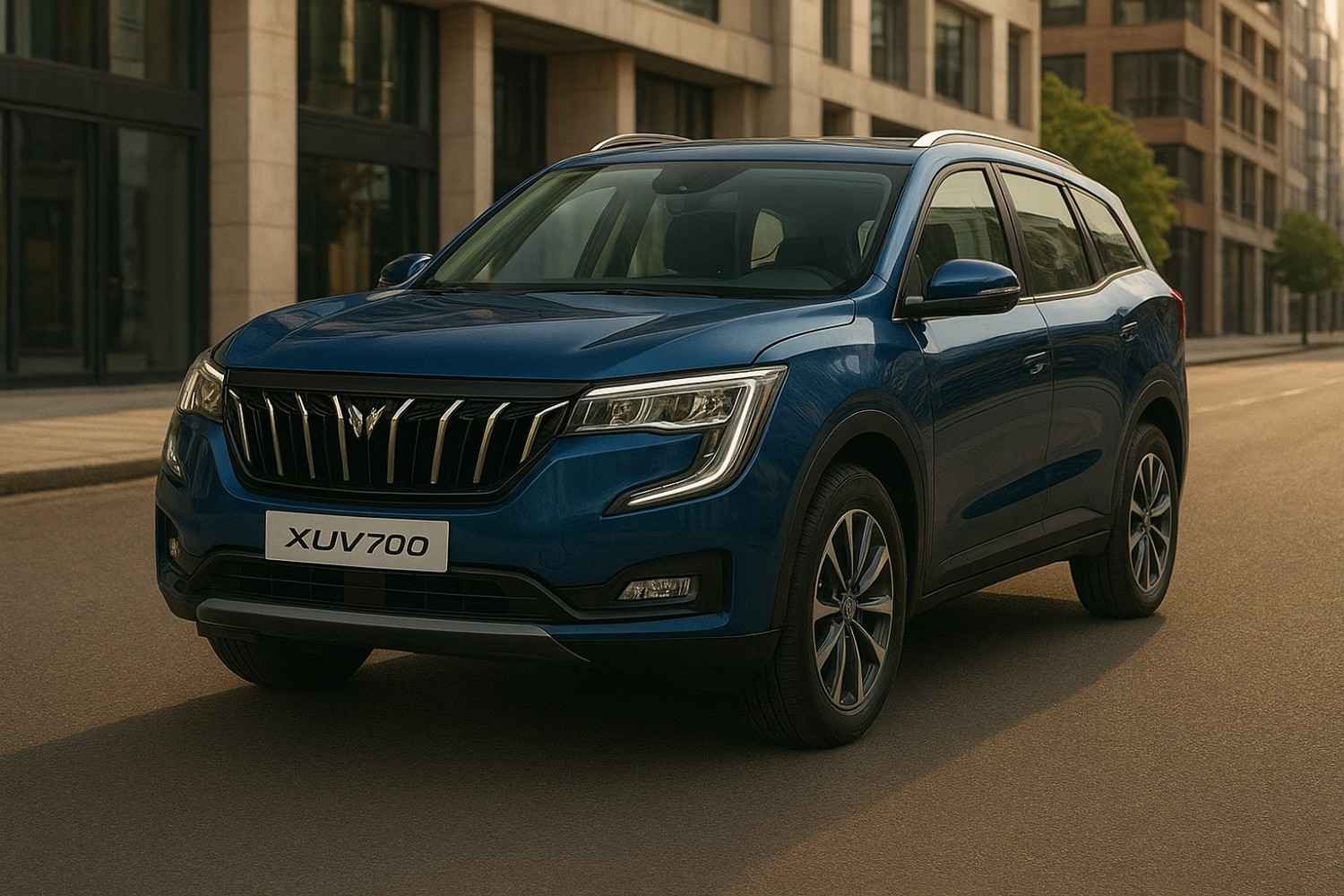
The Mahindra XUV700 redefined what a family SUV could offer in India. Positioned as a premium mid-size SUV, it blends SUV aggression with sedan-like refinement. Built on a monocoque platform, it delivers sharp handling and a cabin loaded with modern conveniences. Available in both 5- and 7-seater configurations, the XUV700 appeals to buyers who want cutting-edge technology without compromising on space or safety. Its key strengths lie in its advanced driver-assistance systems, dual-zone climate control, panoramic sunroof, and seamless connectivity, making it a favorite among urban professionals and tech-conscious families.
Tata Safari Overview: Why It’s Built for Large Families

The Tata Safari carries forward a legacy that Indian car buyers trust. With its bold stance and premium interior craftsmanship, it’s built for those who value substance over flash. The Safari comes standard as a 7-seater (with optional 6-seater captain chairs), offering exceptional rear legroom and a cabin designed for long-distance comfort. Powered primarily by a robust 2.0L diesel engine, it excels on highways and rough terrain alike. Its strengths are rooted in practicality: a spacious boot, superior third-row usability, and a suspension tuned for India’s varied road conditions, making it ideal for large families and frequent travelers.
XUV700 vs Safari Segment Positioning & Design Differences
XUV700 vs Safari: Segment Size & Road Presence
The XUV700 slots neatly into the mid-size family SUV segment: slightly more compact than the Safari, which leans toward a full-size presence. This makes the XUV700 easier to maneuver in tight city lanes, while the Safari commands attention on open roads.
XUV700 vs Safari Exterior Design: Sporty vs Muscular Appeal
The XUV700 sports a sporty, modern aesthetic with LED lighting, sharp creases, and an aggressive front fascia that appeals to younger buyers. The Safari, in contrast, embraces a muscular, timeless design with a bold grille, upright windshield, and a commanding silhouette that signals durability and stability.
XUV700 vs Safari Interior & Cabin Comfort Comparison
Inside, the XUV700 feels like a tech cockpit, featuring a driver-centric dashboard, dual 12.3-inch screens, ambient lighting, and voice-enabled controls. The Safari opts for a more traditional yet premium layout, using soft-touch materials, wood accents, and thoughtful ergonomics that prioritize comfort over gadgetry.
XUV700 vs Safari Engine, Power & Driving Experience
Both SUVs offer diesel and automatic options, but their driving character differs significantly. The table below compares the XUV700 and Safari on engine options, power output, torque delivery, and drivetrain to help you understand how each SUV performs in real-world family driving conditions.
|
Parameter |
Mahindra XUV700 |
Tata Safari |
|
Engine Options |
2.0L turbo petrol, 2.2L diesel |
2.0L turbo diesel only |
|
Transmission |
6/7-speed manual, 6-speed automatic |
6-speed manual, 6-speed automatic |
|
Power (bhp) |
200 (petrol), 185 (diesel) |
170 (standard), 200 (Gold variant) |
|
Torque (Nm) |
300 (petrol), 375 (diesel) |
350 (standard), 400 (Gold) |
|
Drivetrain |
FWD / AWD |
FWD / AWD |
The XUV700 delivers sportier performance, especially with its petrol engine, making it responsive in city traffic and confident on highways. The Safari, with its higher torque output (in Gold trims), offers effortless cruising when fully loaded, making it more relaxed on long drives with seven passengers.
XUV700 vs Safari Mileage & Real-World Fuel Efficiency
Fuel economy is a key differentiator:
-
XUV700 (Diesel): ~12–13 kmpl in city, ~15–16 kmpl on highway
-
XUV700 (Petrol): ~10–11 kmpl city, ~13–14 kmpl highway
-
Safari (Diesel): ~10–11 kmpl city, ~13–14 kmpl highway
The XUV700 edges ahead in fuel efficiency, particularly in its petrol guise, which appeals to those with moderate monthly running (under 1,500 km). The Safari, while slightly thirstier, justifies its consumption with superior load-carrying stability and highway composure. For families prioritizing lower running costs, petrol XUV700 variants make more sense, while Safari suits high-mileage highway users.
XUV700 vs Safari Ride Quality & Seating Comfort
The XUV700 uses a softer suspension setup, making it ideal for urban commuting and smooth highways. However, its third row is best suited for children or short trips.
The Safari shines in long-distance comfort. Its longer wheelbase translates to generous legroom in the second and third rows, and the seats are well-cushioned for adult passengers. The ride is more composed over broken roads, thanks to its sturdier chassis tuning.
XUV700 vs Safari Features, Infotainment & ADAS
This comparison breaks down the key features, infotainment systems, and driver-assistance technologies offered by the XUV700 and Safari, focusing on comfort, convenience, and safety for family use.
|
Feature |
Mahindra XUV700 |
Tata Safari |
|
Infotainment |
10.25-inch touchscreen, Alexa, wireless CarPlay |
8.8-inch system, wired CarPlay/Android Auto |
|
ADAS |
Yes (lane assist, AEB, ACC in AX7L) |
No ADAS; relies on passive safety |
|
Sunroof |
Panoramic (standard in mid+ trims) |
Only in top Gold variants |
|
Climate Control |
Dual-zone (all variants) |
Dual-zone only in higher trims |
|
Drive Modes |
Zip, Zap, Zoom (urban/touring/sport) |
Terrain modes (Normal, Wet, Rough) |
The XUV700 is the tech leader, packed with features that appeal to connected, modern families. The Safari focuses on tactile comfort, offering fewer digital distractions but greater physical ease.
XUV700 vs Safari Safety Ratings & Family Protection
Both SUVs have earned strong Global NCAP ratings. The XUV700 goes further with Level 2 ADAS in top variants, offering automatic emergency braking, lane-keeping assist, and adaptive cruise control. The Safari prioritizes passive safety with a rigid body structure, six airbags (in higher trims), ISOFIX child seat anchors, and excellent crash protection, making it especially family-friendly.
In short, XUV700 focuses on accident prevention through technology, while Safari emphasizes protection and stability during impact.
XUV700 vs Safari Price, Variants & Value for Money
Below is a clear comparison of XUV700 vs Safari pricing, including starting prices and top-end variants, to help families assess overall value for money.
|
SUV |
Starting Price (Ex-showroom) |
Top Variant Price |
|
XUV700 |
₹13.99 Lakh |
₹23.99 Lakh |
|
Safari |
₹14.99 Lakh |
₹22.99 Lakh |
The XUV700 offers a lower entry point, especially for petrol buyers, and scales up with tech-heavy trims. The Safari starts slightly higher but delivers more cabin space and comfort from the base variant upward.
Mahindra XUV700 vs Tata Safari: Pros and Cons
Mahindra XUV700
Pros: Advanced ADAS, modern design, better fuel efficiency (petrol), panoramic sunroof, seamless connectivity
Cons: Third row less comfortable for adults, higher trims get expensive
Tata Safari
Pros: Best-in-class third-row comfort, excellent highway stability, premium cabin, strong heritage
Cons: No petrol option, lower fuel efficiency, limited tech in mid variants
Buyers should shortlist variants based on seating layout first, then decide between technology-heavy trims (XUV700) or comfort-focused trims (Safari).
XUV700 or Safari: Which SUV Suits Your Family Best?
-
The XUV700 is tech-friendly and ideal for urban families.
-
The Safari is best suited for families who regularly travel long distances.
-
If you’re a first-time SUV buyer, the XUV700 is easier to handle and has lower entry costs.
-
If you’re looking for a 7-seating comfort for a large family, the Safari is a good option.
-
For budget conscious buyers with premium needs, the petrol variant of the XUV700 offers best value.
XUV700 vs Safari Ownership Costs & Resale Value
The XUV700 benefits from Mahindra’s aggressive service network and strong demand in metros, ensuring good resale, especially for automatic and diesel variants. The Safari, while slightly costlier to maintain due to diesel consumption, retains long-term value through its reputation for durability and comfort. Both hold their worth well after three years, but the XUV700 may attract quicker resale in tech-driven markets.
Protecting Your SUV’s Paint for Long-Term Ownership
For family SUVs like the Mahindra XUV700 and Tata Safari, exterior protection plays a key role in maintaining resale value and visual appeal over time. Daily city driving, highway stone chips, tight parking spaces, and harsh Indian weather can cause scratches, paint fading, and minor surface damage.
Installing a Paint Protection Film (PPF) helps safeguard the factory paint from these issues. Premium solutions such as Garware Hi-Tech Films PPF offer an invisible protective layer that resists scratches, UV damage, and chemical stains, while preserving the original gloss. For owners planning long-term use or higher resale value, PPF is a practical add-on, especially for large family SUVs that are used regularly.
Mahindra XUV700 vs Tata Safari: Final Verdict for Families
The Mahindra XUV700 vs Tata Safari isn’t about which SUV is better: it’s about which is better for you.
Choose the XUV700 if you value cutting-edge technology, city-friendly dimensions, and the option of a fuel-efficient petrol engine. It’s the smart pick for modern, connected families who want their SUV to feel like an extension of their digital life.
Choose the Safari if your priority is space, comfort, and highway confidence, especially when carrying seven people regularly. It’s the SUV that treats every journey like a family ritual, not just a commute.
Your decision ultimately hinges on whether you drive for tech, or for togetherness.
FAQs on Mahindra XUV700 vs Tata Safari
- Which SUV is better for city driving – XUV700 or Safari?
The XUV700 is better for city driving due to its lighter weight, tighter turning radius, and more responsive handling.
- Which SUV is better for long highway trips?
The Tata Safari is superior for long highway trips, thanks to its plush rear seating, stable high-speed dynamics, and better third-row comfort.
- Which has better fuel efficiency?
The XUV700 offers better fuel efficiency, especially in its petrol variant, which delivers noticeably lower running costs in city conditions.
- Does XUV700 have ADAS features?
Yes, the XUV700 AX7L and AX7 trims come equipped with advanced ADAS, including lane departure warning, automatic emergency braking, and adaptive cruise control.
- Which SUV is more family-friendly for 7 passengers?
The Tata Safari is more family-friendly for seven passengers, offering greater legroom, easier third-row access, and seats comfortable enough for adults.
- Are maintenance costs similar?
XUV700 maintenance is moderately priced, while the Safari’s diesel engine leads to slightly higher long-term servicing and fuel costs.
- Which has better resale value?
Both hold strong resale value, but the XUV700 may sell faster in urban markets due to its tech appeal and petrol option.
- Is Safari worth the higher entry price?
Yes, if you frequently travel with a full cabin, then the Safari’s comfort, space, and ride quality justify the premium for highway-oriented families.
- Can XUV700 handle rough roads?
Yes, the XUV700 handles rough roads well with 190mm ground clearance and a stable suspension, though the Safari feels more composed on severely broken surfaces.
- Which SUV should a first-time family SUV buyer choose?
A first-time buyer should consider the XUV700 for its user-friendly tech, lighter driving dynamics, and lower entry price, especially in petrol-automatic guise.
- Which SUV is cheaper to maintain over 5 years?
The XUV700 petrol is cheaper to maintain over five years due to lower service costs and fuel expenses, while the Safari diesel suits high-mileage users despite slightly higher upkeep.