
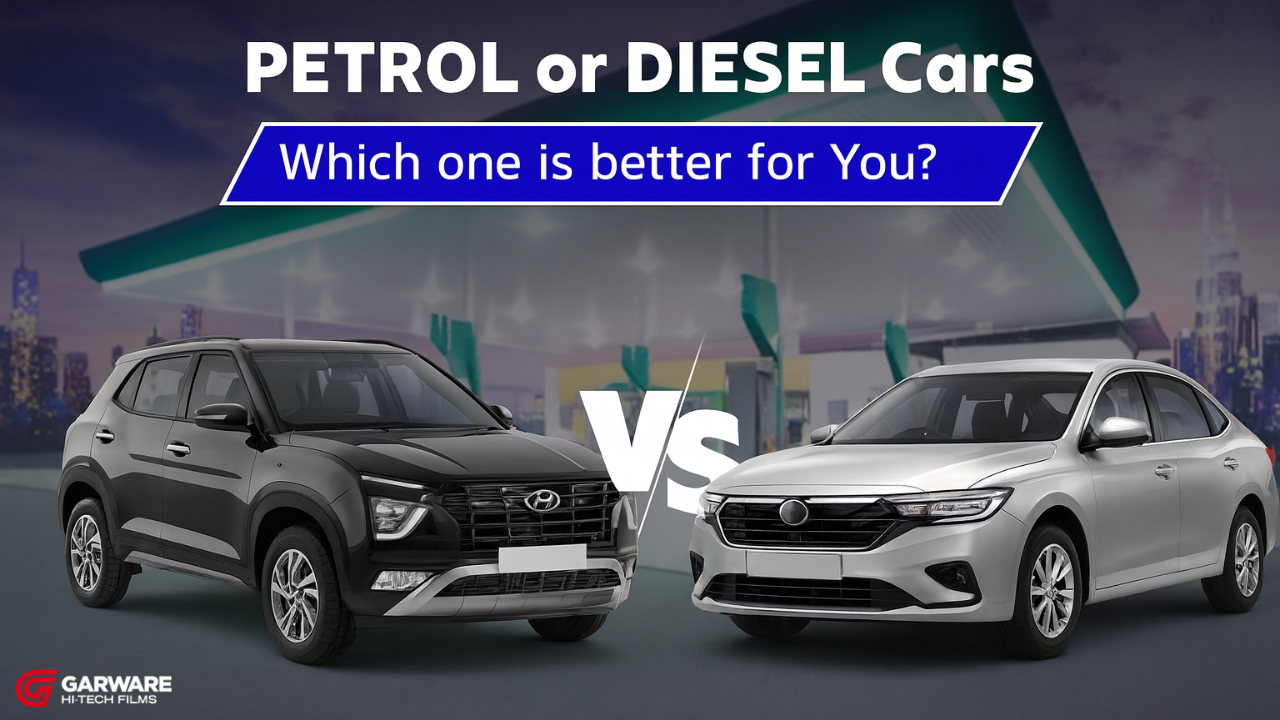
Choosing between petrol vs diesel cars is more than just about the mileage; it is also about future-proofing your investment. With the fast rise of electric vehicles, many states are offering subsidies and tax incentives to make them more attractive. Diesel bans and restrictions are a topic of constant debate in big cities like Delhi and Bengaluru, and fuel prices continue to swing unpredictably.
So if you are confused and asking yourself which is better: a petrol or a diesel car, then this guide is set to help you out and decide which engine will suit your driving habits, budget, environment, and plans for the next decade.
What Are Petrol Cars?
Cars with a petrol engine use spark ignition to burn a mixture of fuel and air inside the cylinders. They have lighter engine blocks, simpler exhaust treatment, and faster revving characteristics.
A petrol car is suited for young professionals and first-time buyers who mainly drive within city limits. It is also an attractive option for people who drive under 15,000 km per year and owners who want a vehicle that is easy to maintain and has lower upfront costs. Often described as smooth, quiet, and refined, petrol cars feel less industrial and more approachable for new drivers and families.
An interesting fact to remember is that though people choose petrol vs diesel engines due to lower EMIs, fuel costs can wipe out any savings within 5 to 7 years. That’s not all; petrol’s resale value can also lag if you drive the car long distances. The cars are thus best for short, daily commutes, city driving with lots of idling and frequent stops, and occasional weekend trips.
What Are Diesel Cars?
Diesel engines use compression ignition and squeeze air to extremely high pressures to ignite fuel. They also produce more torque at lower RPMs, making them ideal for pulling heavy loads and highway cruising, another advantage of a diesel car over a petrol car.
Commercial vehicle owners, taxi fleets, and high-mileage commuters, as well as car enthusiasts who like the muscular feel and engine braking these vehicles have, are the perfect users for a diesel car. That’s not all: cars with a diesel engine are seen as ‘rugged,’ ‘serious and ‘businesslike,’ projecting a workhorse image.
However, a diesel car disadvantage you should know is that these engines are subject to a higher road tax and more insurance premiums, often facing a policy risk. Their resale value can also collapse overnight in the case of changing regulations. These cars are best suited for long highway drives and intercity commutes, hilly terrains, or towing trailers, and drivers who cover more than 2000 km every month.
Petrol vs Diesel Cars - Detailed Differences:
There are many ways in which both these engines differ. Let’s do an indepth petrol vs diesel cars comparison to get a better idea.
| Factor | Petrol | Diesel | 2025 Context |
|---|---|---|---|
| Upfront Cost | Rs 1 to 1.5 lakh cheaper | More expensive | EVs are now reducing lifetime cost differences |
| Fuel Price Gap | Narrowing, petrol is just Rs 10 to 12 per liter costlier | Slight edge in running cost | This may reverse within the next year. |
| Maintenance Costs | Lower | Higher (DPF, injectors) | Diesel repairs are getting costlier due to emission tech. |
| Resale Value | Historically lower | Traditionally higher | Urban resale of diesel cars declining |
| Noise and NVH | Smoother and quieter | More vibrations and engine noise | Comfort-sensitive buyers prefer petrol |
| Eco-Impact | More CO2 emissions | More PM2.5 particulates | Diesel faces a tighter emission scrutiny |
| Policy Risk | Low | Medium-High (with the rumours of a ban) | Diesel losing political support in cities. |
Driving Distance and Usage
Diesel engines are about 15-25% more fuel efficient. For example, a petrol hatchback goes for around 12 to 14 km/litre, while its diesel equivalent can give approximately 16 to 18 km/litre/
Performance Metrics
When you compare the petrol vs diesel engine efficiency, you will see that the former revs faster and has better acceleration at 0 - 100 km/h. Diesel cars, on the other hand, have more torque, which is better for overtaking on highways.
Purchase Price and Insurance Premiums
One diesel car disadvantage is that they are Rs 1 to 1.5 lakh costlier upfront, and their insurance can be 10 to 15% higher annually.
Maintenance and Service
Comparing the petrol vs diesel car maintenance cost will help you learn that petrol cars are usually easier to maintain since they have no particulate filters and less injector complexity. Diesel cars need DPF servicing, costlier oil changes, and pricier parts.
Petrol vs Diesel Car Resale Value
Diesels have a better value in rural and Tier 2 markets, while resale can tank in big cities, especially if diesel bans are announced.
Engine Life
Diesel engines are mechanically stronger and can outlast petrol engines if well-maintained. In Delhi NCR, however, diesel cars that are over 10 years old are banned, and petrol cars can run for 15 years.
The Ownership Timeline: 1, 3, 5, and 10 Years
| Year | Petrol Car | Diesel Car |
|---|---|---|
| Year 1 | Low EMI, simpler servicing | Costlier to buy, slow break-even |
| Year 3 | Fuel costs add up | Starts making up fuel savings |
| Year 5 | Still has a higher total cost if you drive less than 15 km/year | Breakeven point (close to 80,000 km driven) |
| Year 10 | May feel outdated, nearing the end of life | The engine is still strong, but DPF issues are likely. |
When Should You Prefer a Diesel Car over a Petrol Car?
-
When you drive more than 2000 km per month consistently.
-
You do frequent highway trips or live in hilly areas.
-
You tow trailers or carry heavy cargo (SUVs or pickups)
-
You plan to keep the vehicle for 7 to 10 years.
-
You love the torque of a diesel car.
-
You live outside big metro cities where bans are less likely to happen.
When Should You Prefer a Petrol Car over a Diesel Car?
-
You drive less than 1500 km per month.
-
Most of your usage is in stop-and-go city traffic.
-
You plan to upgrade to switch to EVs in 3 to 5 years.
-
You prefer the quiet, smooth ride of a petrol vs a diesel car for city driving.
-
You care about urban air quality and pollution
-
You want a simpler ownership experience.
The Future of Petrol and Diesel in India (2025-2030)
The EV market share is estimated to rise by 15% in 2025: a number that will increase in the next 5 years. Meanwhile, hybrid cars (fuel+EV) and CNG cars are growing as transitional options. A possible ban on diesel cars in Delhi and Bengaluru will restrict old cars with diesel engines by 2026.
In the long term, diesel cars may likely become a commercial-only segment, while petrol cars will remain popular among low-mileage owners in the city until the EV infrastructure matures. This will close the debate for those wondering, which is better: petrol or diesel cars for Indian roads?
So if you drive 20,000+ km per year, buying diesel cars will make sense. On the other hand, petrol cars are a safe and simple choice for urban, low-mileage, or short-term ownership.
Protecting Your Petrol or Diesel Car: Is Paint Protection Film Worth It?
Petrol vs diesel car maintenance costs differ significantly, and it is important to protect their exterior appearance as much as the engines. Diesel cars are mostly used on highways, and can see paint damage happening due to stone chips, tar splashes, and bug splatter. Petrol cars are more popular in cities, and can face scratches from tight parking spaces, pollution, and acid rain.
No matter what kind of car you choose, a high-quality paint protection film can protect it from these damages, thus saving you a lot in terms of costly repairs.
PPFs like the range from Garware Hi-Tech Films keep the paint looking new and preserve the car’s resale value.
Petrol vs Diesel Cars: Which Is Better?
So, is a diesel car better than a petrol vehicle? For most Indians in 2025, petrol cars serve more benefits. They have a lower purchase cost, are easier to maintain, have a lower regulatory risk, and have shorter ownership cycles.
The advantage of a diesel car over a petrol car is that it is better for fuel economy, and is a better option for high-mileage, highway-focused, long-term ownership.
The real winners in a few years will be EVs and hybrids; they will bridge performance, are efficient, and comply with the future needs of vehicle drivers.
So, are you ready to decide? Find the car that suits your needs, and protect it with Garware PPFs: high-performance Thermoplastic Polyurethane Films designed with self-healing, anti-yellowing, scratch-resistant, and hydrophobic properties.
FAQs
-
Which is better: petrol or a diesel car?
It depends on your usage; diesel cars are better for high-mileage drivers, while petrol cars are for city commuters. -
What is the difference between petrol and diesel cars?
Petrol cars use spark ignition and are smoother and quieter. Diesel engines use a compression ignition that produces more torque and are more fuel efficient. -
Which gives better mileage: petrol or diesel?
Diesel cars: they generally return 15-25% better fuel economy. -
Is petrol or diesel better for long drives?
Diesel cars are better for long drives, thanks to their high torque and better highway efficiency. -
Is petrol or diesel better for city driving?
Petrol cars, as they are smoother, quieter and have less particulate pollution. -
Which car has lower maintenance: petrol or diesel?
Petrol cars are cheaper and simpler to maintain. -
Is a diesel car more powerful than a petrol car?
Yes. Diesel cars have more torque, while petrol vehicles have better acceleration. -
Which car is more economical: petrol or diesel?
If you want higher mileage, diesel is better, while petrol is good for low annual usage. -
Why are diesel cars being banned in some cities?
Diesel cars have particulate emissions (PM2.5), which contribute to air pollution, which is leading to bans. -
Which engine lasts longer: petrol or diesel?
Diesel engines typically last longer mechanically, but policy bans can end their usable life sooner. -
Which car is better for resale: petrol or diesel?
Diesel cars hold better value in rural markets; their resale value is declining in cities. -
What is the lifespan of a petrol vs a diesel engine?
Mechanically, diesel engines give close to 3 - 4 lakh km, while petrol engines give approximately 2-2.5 lakh km. In NCR, diesels are limited to 10 years, and petrol to 15 years.