
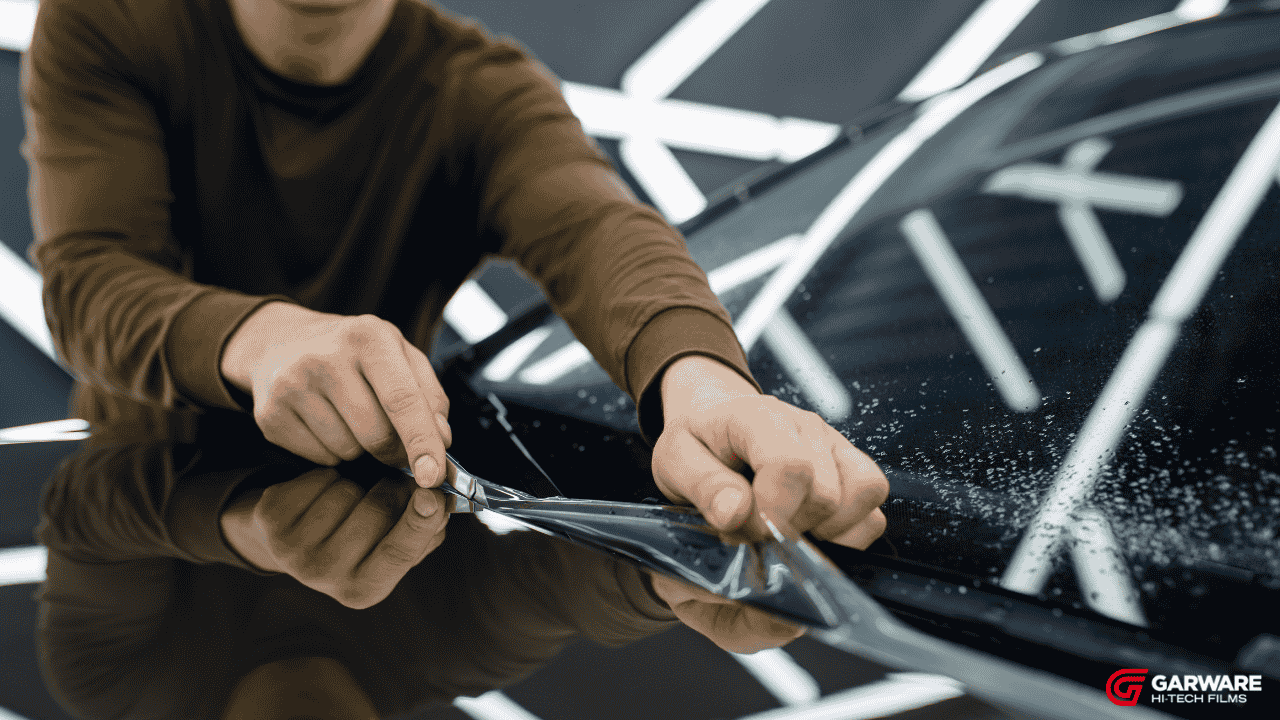
Imagine driving your brand-new car from the showroom to your house: a car that once gleamed under the sun is now covered with debris, water splashes, and bird droppings.
That’s when it hits you: your most valued possession needs to be protected!
Scrolling through endless temporary options, you come across paint protection film. When you dig deeper, you get baffled by various types of PPF: from matte, titanium to black and white PPF, the options are endless and confusing. Each promises you the best aesthetics, durability, and surface defence, but the differences go far beyond just looks.
So now the biggest concern arises, ‘Which paint protection film is best for your car?’
Selecting the appropriate PPF is crucial as it significantly protects your vehicle, influences its resale value, and serves as a valuable long-term investment. Read on to make an informed decision!
What is Paint Protection Film (PPF)?
Paint Protection Film is a thin thermoplastic polyurethane film applied over the car’s paint to protect it. It focuses on:
-
Shielding your car against minor scratches and swirl marks.
-
Deflecting stone chips and road debris.
-
Resisting damage from bird droppings and bug splatter.
-
Blocking harmful UV rays that cause paint fading
-
Preventing stains from environmental contaminants like tar and tree sap
However, not all PPFs are the same; there are different types of PPFs based on material, quality, thickness, finish, and technology, like self-healing or hydrophobic coating.
Choosing the best paint protection film depends entirely on your driving environment, usage patterns, and, of course, your car’s styling preferences.
Types of Paint Protection Film
PPF film types are categorised by durability, aesthetics, finishes, and styling options based on your needs and preferences. Following are a few:
-
Titanium PPF:
-
Designed for top-tier durability, Titanium PPF protects your car from debris, harsh weather, and frequent washing.
-
It offers excellent protection from UV rays and anti-yellowing properties, which help in maintaining the car’s original colour for years.
-
It is an ideal choice for luxury cars and individuals looking for long-term protection for their vehicle.
- Premium PPF
-
Offering a balance between performance and aesthetics, Premium PPF delivers high optical clarity with a smooth, glossy finish.
-
It has self-healing capability and provides reliable UV resistance.
-
It is an ideal choice for a daily-use vehicle with a mid-to-high budget that needs protection, but should also be visually appealing.
-
Plus PPF
-
Designed for car owners who want something more than standard protection. Plus PPF has enhanced features like a hydrophobic coating that makes it easier to clean.
-
It offers better scratch resistance and elasticity, making it suitable for cars that are exposed to harsh conditions or frequent driving on highways.
-
It is an ideal choice for detail-driven car enthusiasts.
-
Matte PPF
-
Transforming your car’s appearance while protecting it, Matte PPF provides a satin or matte finish.
-
It converts your car’s look from gloss to matte without repainting.
-
It is an ideal choice for owners who want both protection and a distinct, contemporary look.
-
Black PPF
-
Featuring a solid black film, Black PPF is perfect for roof wraps, bonnets, and mirrors.
-
It adds an aggressive and sporty vibe while defending your car against scratches and sun damage.
-
It is commonly used in two-tone finishes and is a popular choice for sporty cars.
-
White PPF
-
White PPF is an opaque white film that offers reliable protection in a custom uniform look.
-
It is often used by fleet operators, commercial vehicles, or car owners to make their vehicles look unique and bold.
-
Coloured PPF
-
Available in different colour ranges, coloured PPF starts from red and blue to metallic tones.
-
It is ideal for a car owner who wishes for a visually appealing car without compromising paint.
-
Protect PPF
-
Offering entry-level coverage, Protect PPF saves your car from minor chips and scratches.
-
It is budget-friendly but lacks advanced features like self-healing and hydrophobic coating.
-
It is ideal for short-term protection for new car owners.
How to Choose the Right PPF for Your Car
With so many PPF types for cars, choosing one can be a tough call to make. Follow these tips:
-
Aesthetic preference: Go for Premium PPF or Matte PPF if you prefer a high-gloss or matte finish.
-
Driving habits: If you regularly drive through the city, pick Titanium or Plus PPF as they offer basic self-healing and UV protection features.
-
Budget: Analyse your budget. Go for Protect PPF if you are looking for an entry-level option, and pick Premium or Titanium PPF if you wish for a long-term value.
-
Climate & environment: Cars in hot or dusty regions need paint protection film types that can resist UV rays, dirt, and scratches. Choose one with high resistance features to reduce wear and tear.
-
Installer expertise & warranty: No matter which PPF film type you choose, ensure certified installers and long-term warranties are provided.
Cost vs. Benefits of Each PPF Type
When you compare different paint protection film types, you will observe that not all of them are made from the same material. The three most commonly used are PVC (Polyvinyl Chloride), TPH (Thermoplastic Polyolefin Hybrid), and TPU (Thermoplastic Polyurethane). They have their own price range, durability, and performance benefits.
| PPF Type | PVC PPF | TPH PPF | TPU PPF |
|---|---|---|---|
| Cost | Lowest | Mid-range | Highest |
| Features | Basic protection | Moderate flexibility and clarity | Self-healing, hydrophobic coating, UV resistance |
| Durability | Yellow over time, limited lifespan | Better than PVC but still not long-lasting | Excellent durability and premium finish |
| Long-Term Value | Requires frequent replacement | May need replacement after moderate use | Best value with low maintenance and better resale impact |
ROI Insights:
-
Films that have materials like PVC or TPH may need multiple replacements, which in turn will increase the long-term maintenance cost.
-
Opt for high-end TPU films from brands like Garware Hi-Tech Films, which provide stronger protection.
-
Most of Garware’s paint protection film types offer features such as self-healing, superior hydrophobic property, supreme chemical resistance, anti-yellowing property, easy installation on curved surfaces, and more, making them a smarter investment over time.
Expert Tips on PPF Installation
Tip 1: Choose a professional, as they are well-versed with installation techniques that give clean edges, no air bubbles and a long-lasting finish.
Tip 2: Inspect the surface before application; otherwise, the scratches or swirl marks left might be visible after application.
Tip 3: Use high-quality PPF from brands like Garware Hi-Tech Films that provide TPU-based high-performance PPF.
Tip 4: Before application, evaluate the installation environment as a dust-free, temperature-controlled space is important for flawless application.
Tip 5: After installation, allow the film to cure as per brand guidelines, which is usually 24 to 48 hours, before washing or exposing it to moisture.
Tip 6: Get detailed after-care instructions, such as using pH-neutral shampoo and avoiding pressure washes soon after installation.
Tip 7: Make sure that you ask for warranty details as they will clarify terms, duration, and what’s covered.
Protect Smart, Choose Right
Picking a paint protection film isn’t a one-size-fits-all decision. From basic to advanced films, the ideal choice depends on your vehicle, usage, environment, and aesthetic goals.
By understanding the cost, features, and long-term benefits of each PPF type, you will be able to make an informed decision that enhances your car’s appearance and protects it.
For better results, ensure you consult a certified professional who can guide you through the selection process and ensure precise installation.
You can also visit your nearest showroom or workshop to explore paint protection films for cars and get expert recommendations.
FAQs
1. What is the price of PPF in the Garware Application Studio?
The price of Garware paint protection film varies depending on the film type and car size. On average, it ranges from ₹54,000 to ₹1,50,000 + GST for full-body coverage.
2. How does PPF look after 5 years?
High-quality car paint protection film like TPU PPF retains its clarity and gloss for 5+ years if maintained well. Cheaper PVC films may yellow or peel over time.
3. Is PPF good or bad for cars?
PPF is highly beneficial for protecting the car’s paint from scratches, chips, and UV rays. It preserves the finish and can enhance resale value when properly installed. So, it is indeed good for cars.
4. What is paint protection film, and how does it work?
Paint protection film is a thin thermoplastic polyurethane film applied to your vehicle's painted surfaces. It works as a barrier against physical and environmental damage.
5. How is PPF different from ceramic coating?
PPF offers physical protection from scratches and chips, while ceramic coating enhances shine and repels water but doesn’t protect against physical damage.
6. How long does paint protection film last on a car?
Good-quality paint protection film for cars, especially TPU-based types, lasts between 3 to 8 years with proper maintenance. In the case of high-quality PPF, such as the titanium option from Garware, it comes with a lifetime warranty.
7. Is PPF visible on the car after installation?
No, PPF is nearly invisible when professionally applied. However, matte, black or coloured PPF may be noticeable depending on the finish you choose.
8. Can PPF be removed without damaging the paint?
Yes, PPF can be safely removed by trained professionals without harming the original paint, as long as the film is in good condition and the paint is factory-applied.
9. Does PPF protect against scratches and UV damage?
Yes, most types of paint protection film provide strong resistance against minor scratches, swirl marks, and harmful UV rays.
10. Is it necessary to maintain or clean the film regularly?
It is not mandatory, but regular cleaning helps maintain the look and longevity of the film. Use pH-neutral car shampoos and avoid abrasive tools to protect the PPF coating.
11. How much does it cost to install PPF on a car?
Installation costs vary based on the type of PPF, vehicle size, and coverage area. Expect to pay anywhere from ₹54,000 to ₹1,50,000 + GST.