
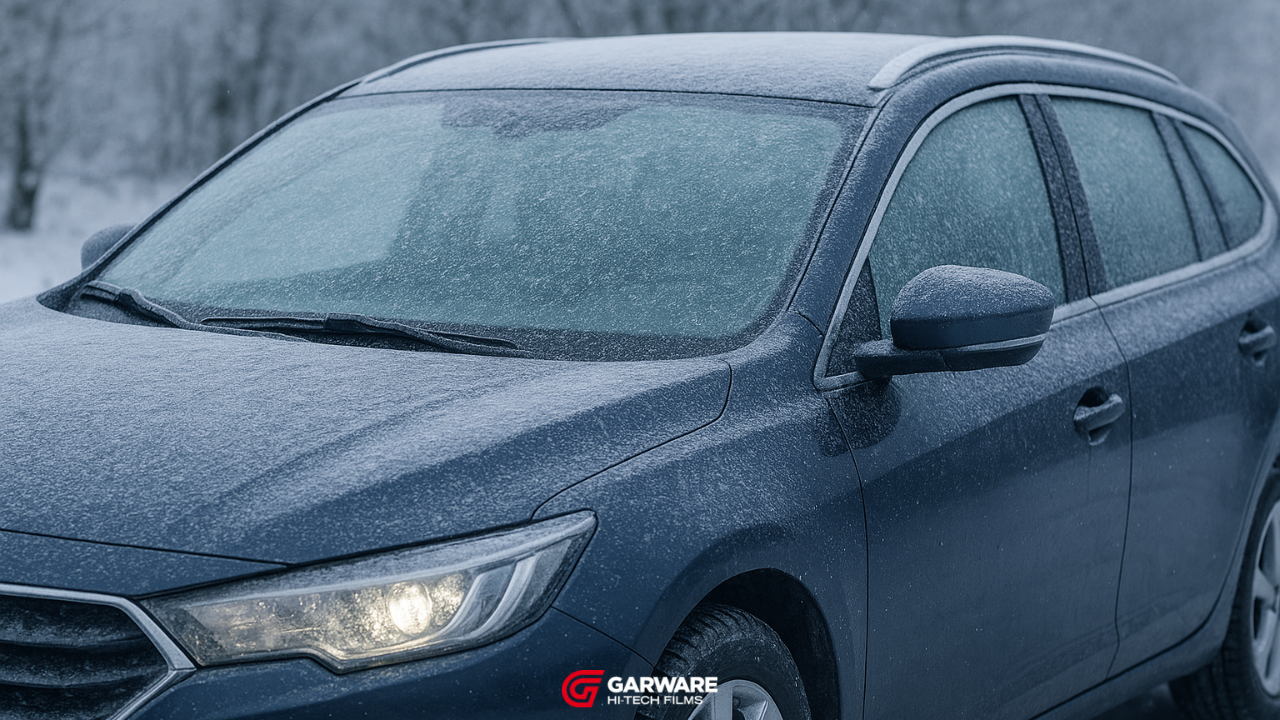
Winter, the season of cold, is often considered calm and harmless for vehicles, as there is less rain, and the air seems cleaner. However, behind every quiet season lies a silent threat, impacting your car’s exterior and driving comfort.
The cold temperatures stress the paint, and the low winter sun creates sharp glare, causing fogging, which reduces visibility. Many owners believe window films and paint protection film (PPF) are primarily summer accessories intended to protect your car from UV protection, which is not the case.
PPF coating for cars works year-round, benefiting you in both the winter and summer seasons. High-quality sun film for car windows helps reduce glare and discomfort caused by the low winter sun. Let’s explore some winter car care tips and know what exactly happens to your car in the winter.
What Happens to Your Car in Winter?
In winter, your car looks clean and in good condition, but it is affected in multiple ways. Understanding what happens and how paint protection film for winter helps your car in this cold weather is important:
-
Rising of temperature leads to the car’s paint contracting and expanding, weakening the coat and forming micro-cracks.
-
Salt and chemicals are used to keep the regions clean, leading to moisture accumulating on the paint.
-
Cold glass meets warm cabin air and instantly fogs up, reducing road visibility and increasing safety concerns.
-
Air becomes dry and dusty, wiping directly with the cloth often leaves swirl marks.
-
In winter, the sun is lower in the sky and often shines directly on the windshield, making it a dangerous glare compared to the bright summer sun.
Following is a small comparison between the challenges faced by car owners and the PPF benefits in winter:
Winter Challenges vs. How PPF Helps
|
Winter Challenge |
How It Affects the Car |
How PPF Helps |
|---|---|---|
|
Temperature swings |
Weakens the clear coat |
Acts as a stable barrier, reducing stress impact |
|
Road salt & chemicals |
Corrosion, discolouration |
Blocks contaminants from touching the paint |
|
Micro-scratches |
Swirl marks & dullness |
Scratch-resistant surface absorbs friction |
|
Dust & frost wiping |
Clear coat abrasion |
Prevents scratches from reaching the paint |
|
Dry weather |
Paint loses gloss |
PPF maintains shine and clarity |
Why PPF Matters in Winter?
Following is a small comparison of how your PPF coating for the car works in different conditions and the consequences without it:
|
Condition |
With paint protection film in winter |
Without paint protection film in winter |
|---|---|---|
|
Road Salt Exposure |
Road salt never touches the paint, preventing rust and corrosion. |
Salt directly attacks the paint surface, increasing corrosion risk. |
|
Winter Scratches |
PPF absorbs winter scratches and even self-heals minor marks. |
Ice tools and debris scratch the clear coat, causing visible damage. |
|
Paint Gloss |
Maintains a clean, glossy, showroom-like shine all winter. |
Gloss fades gradually as the paint dulls from cold, salt, and grime. |
|
Chemical Contaminants |
Slush chemicals and de-icers are kept away from the paint and cannot stick to it. |
Harsh winter chemicals stick to the paint, leaving stains. |
|
Long-Term Paint Health |
Paint stays vibrant and protected year after year with minimal wear. |
Paint deteriorates over seasons, leading to fading, roughness, and repainting. |
Why Window Films Matter in Winter?
Window films for winter offer many benefits, just like paint protection film. Some are:
-
The sun in winter sits lower, causing eye strain, making driving unsafe. Window films reduce glare, creating a comfortable and clear visual.
-
Helps retain the warmth inside the car.
-
UV protection in winter is as important as it is in summer; it helps block these rays, protecting the interior of the car and your skin.
-
Provides privacy, security, especially when parking after sunset.
-
Reduces scatter light due to fog, giving clear vision through the glass.
Benefits of Window Films in Winter
|
Winter Problem |
Effect on Driving |
How Window Films Help |
|---|---|---|
|
Low-angle sun |
Harsh glare |
Reduces brightness & eye strain |
|
Fog & haze |
Reflects UV |
Blocks harmful UV rays |
|
Cold cabin |
Heat loss |
Improves insulation |
|
Early sunsets |
Low privacy |
Offers better security |
|
Foggy glass |
Visibility issues |
Minimises reflection & improves clarity |
Winter Car Care Tips for Better Protection
To make PPF and window films even more effective, follow these simple winter car maintenance tips:
-
Wash your car regularly: This prevents salt and grime from building up. Salt left unwashed can corrode even strong surfaces over time.
-
Avoid wiping frost or dust with a dry cloth: Dry wiping can cause micro-scratches. Always use a proper de-icing tool, a microfiber cloth, and a defogging system.
-
Maintain tyre pressure: Cold air reduces tyre pressure quickly. Low pressure affects grip, braking, and fuel efficiency.
-
Lubricate door seals: Cold weather can stiffen or crack rubber seals. A silicone-based lubricant keeps them flexible.
-
Use anti-fog treatments: Anti-fog sprays or solutions prevent moisture buildup on the inside of glass.
-
Park in shade or covered spaces: Reduces frost formation and keeps the interior warmer.
Is Winter a Good Time to Install PPF & Window Films?
Yes, it is absolutely safe. Some people believe installing any other or sun control films in winter is not safe. However, it is completely safe and highly recommended.
-
Installers use climate-controlled environments to ensure proper bonding of PPF and window films.
-
Window films prevent all the damage, such as salt, chemicals, scratches, and fogging, from the start.
-
Modern films are engineered to perform the same in summer, monsoon, and winter.
Garware Hi-Tech Films: Winter-Ready Protection (PPF & Window Films)
Garware Hi-Tech Films offers solutions built for year-round durability, including challenging winter conditions.
Garware PPF: Winter Performance Highlights
-
Shields paint against road salt, slush, chemicals, and grime
-
Reduces winter-induced micro-scratches
-
Maintains high gloss and clarity even during dull weather
-
Features a self-healing top layer that works with mild heat
-
Garware’s PPF is engineered to resist winter corrosion and preserve the paint long-term.
Garware Window Films: Winter-Driven Benefits
-
Minimise harsh glare caused by the low winter sun
-
Improve insulation for a comfortable cabin
-
Block UV rays reflected by haze, fog, and winter glare
-
Provide high optical clarity for foggy or dim conditions
Together, Garware’s PPF and window films offer reliable, all-season protection trusted by car owners who want performance, durability, and comfort through every climate.
Seasonal Protection, Year-Round Value
Winter looks like the most peaceful season, but it is quite threatening to your vehicle. Whether it is paint, interior, or glass, this season affects the vehicle. From cold air, micro-scratches, to glare and fog, winters slowly take a toll on your vehicle if not addressed.
Using paint protection film and window films ensures your car is protected, maintains comfort while driving, and has a better long-term value. By using winter car maintenance tips, your car is well prepared for the winter.
Exploring brands like Garware Hi-Tech Films ensures high-quality PPF and window film.
Don’t let this winter take a toll on your vehicle; opt for PPF and window film today!
FAQ
1. Is PPF really useful during winter, or only in summer?
PPF protects from winter-specific threats like road salt, scratches, and dullness, making it equally important in cold months.
2. How does road salt affect paint, and can PPF prevent damage?
Salt accelerates corrosion. PPF creates a barrier that prevents it from touching the paint.
3. Do self-healing PPFs work in winter?
Yes. Mild heat, from sunlight, a garage, or warm water, is enough to activate the healing layer.
4. Can window films reduce glare from the low winter sun?
Absolutely. They cut glare significantly and make winter driving safer.
5. Is UV protection needed in winter?
Yes. UV rays reflect off fog, haze, snow, and glass.
6. Do window films help keep the cabin warm?
High-quality films improve insulation and reduce heat loss.
7. Can PPF prevent scratches caused by jackets or frost wiping?
Yes, PPF absorbs these micro-scratches and keeps the paint safe.
8. Is winter a safe time for installation?
Yes. Professional indoor installations ensure proper curing.
9. Do window films improve visibility during fog?
Optically clear films reduce internal reflections, improving clarity.
10. Do brands like Garware Hi-Tech Films perform well in winter?
Yes. Garware’s PPF and window films are engineered for year-round durability, including winter challenges.